23-year-old song sparks apology for defaming Late Educationist


Shimla, June 26,
A folk song recorded nearly 23 years ago has resurfaced, reigniting controversy over its offensive portrayal of a respected educationist and war veteran who passed away more than seven decades ago. Folk singer Roshni Sharma has now issued a formal public apology, admitting that the song was based on false and fabricated information that unfairly damaged the legacy of the late Master Layak Ram Mehta.
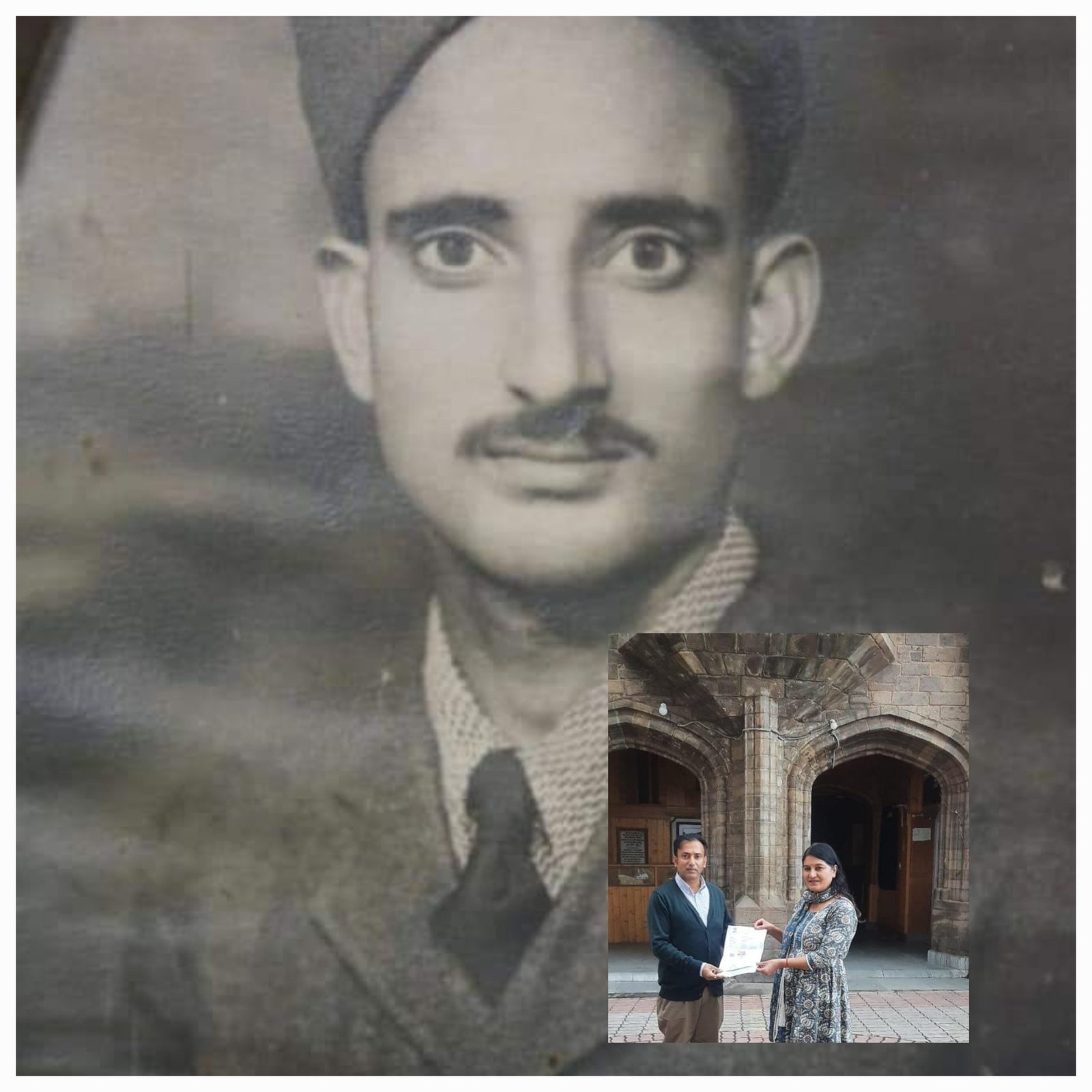
In a significant gesture of remorse, Sharma submitted a sworn affidavit to Vivek Mehta, grandson of Master Layak Ram, at the office of the Deputy Commissioner in Shimla. In the affidavit, she expressed deep regret and sought forgiveness from the family for the harm caused. She revealed that in 2002 she recorded a folk song titled “Layakrama,” released on cassette and CD formats, but clarified that the lyrics were entirely based on hearsay and not verified. Sharma admitted to having no personal knowledge of the person referred to in the song.
According to her statement, as soon as the family raised objections to the content, she took immediate action to stop its circulation. In her emotional apology, Sharma stated that the song was rooted in baseless rumors and had caused lasting distress to a family that carried the memory of a noble figure. “I take full moral and personal responsibility for having sung this song and I deeply regret my actions. I sincerely and wholeheartedly apologize to the family, especially to Mr. Vivek Mehta,” she said. Sharma also committed to never performing or sharing the song again and warned that any individual or party circulating it in any format would face legal action.
As per his family, late Master Layak Ram Mehta was born on July 27, 1924, in Jharag village of the then Bushahr state, now part of Shimla district. He was the only son of Dhyanchand Singh and Devaki Devi, and grandson of Mahatta Thakur Das, who served as Sadar Kannungo in the princely state of Bushahr. A descendant of the historically respected Chieftain Shri Bhag Dev (c.1750), Layak Ram pursued his early education from Maharaja Padam High School in Rampur and passed his matriculation in November 1943. The following year, he enrolled for higher studies in Lahore.
During his student years in Lahore, he voluntarily joined the Royal Indian Air Force on April 8, 1944, and served as an Air Cadet until April 14, 1948. His training included electronics, and he was conferred the service number RIAF/37929. A passionate footballer, horse rider, and hunter, Layak Ram also participated in active World War II operations. He was officially recognized as a War Veteran and was decorated with the prestigious Distinguished Flying Cross (DFC) for acts of exceptional bravery on the Burma front against Japanese forces during the war.
After India gained independence, Layak Ram returned to his homeland and dedicated his life to teaching and social reform in the rural pockets of Shimla and Bushahr. He worked voluntarily to uplift the poor and underprivileged, spreading awareness against illiteracy, superstition, and regressive social practices. He was one of the early individuals to promote apple cultivation in Upper Shimla in the mid-1940s, establishing one of the oldest orchards in the region—Sundarvan.
Despite his short life, his impact on society was profound. On November 20, 1953, while still serving as a teacher, Master Layak Ram passed away at the age of 30 due to a brain hemorrhage. His final rites were conducted in his native village under the guidance of the family’s Kuldevta Nageshwar Ji. His body was brought back with due respect by his relatives, including Judge Narayan Singh and DIG Police Govind Singh, and placed for public homage in the Kuldevta’s tent.
Speaking to the media, Vivek Mehta, grandson of the late Master Layak Ram, said that the defamatory song had caused deep pain to the family and unfairly distorted the legacy of a man who served both the country and society with integrity. “Many of his students are still alive and remember him as a role model. Such baseless portrayals dishonor his contributions and risk igniting social tension between regions,” he said. Vivek added that other singers have also uploaded the same song on digital platforms without the family’s consent and urged them to remove the content immediately and issue public apologies, failing which legal action would be pursued.
While the family acknowledged that no act can fully undo the damage caused, they appreciated Roshni Sharma’s public apology as a morally responsible and voluntary step. They have taken the gesture into account with due seriousness.
About the Author


The HimachalScape Bureau comprises seasoned journalists from Himachal Pradesh with over 25 years of experience in leading media conglomerates such as The Times of India and United News of India. Known for their in-depth regional insights, the team brings credible, research-driven, and balanced reportage on Himachal’s socio-political and developmental landscape.