CITU to intensify struggle against Agnipath, labour codes; Calls 9 July strike


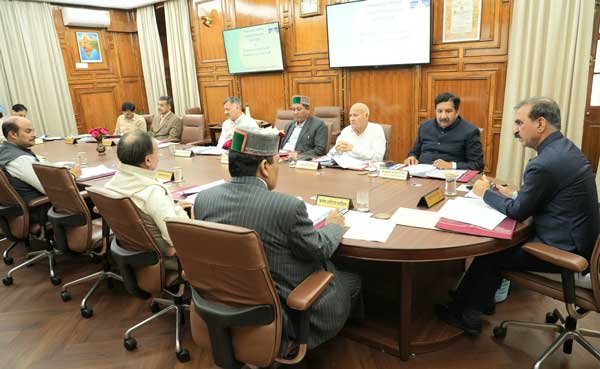
Photo used for indicative purpose only. Source Internet
Shimla, June 9,
Signalling growing discontent with the Centre’s labour and employment policies, the Himachal Pradesh State Committee of the Centre of Indian Trade Unions (CITU) has called for a statewide mobilisation on July 9. This action is part of a larger nationwide protest against what the union terms as “exploitative reforms” initiated by the Central government. At the heart of the protest lies strong opposition to the Agnipath scheme and other fixed-term recruitment models such as “Agniveer”, “Yuddhveer”, and “Koylaveer”, which the union claims undermine job security, especially among the country’s youth.
The decision to mobilise was taken at a meeting held at the CITU State Office, Kisan Mazdoor Bhawan, Kaithu, Shimla. Presided over by state president Vijender Mehra, the meeting was also addressed by CITU National Secretary Dr. Kashmir Thakur and State General Secretary Prem Gautam, among others. During the session, the leadership expressed alarm over what they described as a deliberate shift toward contractualisation of even national defence roles. They accused the government of turning young soldiers into temporary assets rather than honouring long-term service commitments that come with pension and security.
Dr. Thakur argued that the Agnipath scheme, along with its variants, sets a dangerous precedent. “This is no longer just about labour laws. The government is redefining national service with short-term contracts that fail to secure the futures of our jawans. It is a deeply unsettling shift that mirrors the plight of workers across industries, where permanency and protections are being eroded,” he stated. According to CITU, these new schemes not only degrade employment conditions but also introduce a ‘use and discard’ mentality into sectors where stability and morale are crucial.
Prem Gautam added that CITU is among the first major trade unions to publicly challenge the military recruitment policies, warning that such models weaken the institutional integrity of the armed forces. He linked the employment models to broader changes introduced by the four new labour codes, which he claimed have stripped legal protection from nearly three-fourths of India’s workforce and industries. CITU leaders maintained that these changes represent a full-scale dismantling of both civil and military job security structures.
The meeting also extended solidarity to other vulnerable worker groups, including 108 and 102 ambulance staff, Anganwadi workers, mid-day meal providers, and MGNREGA employees. Their demands include the repeal of the four labour codes, the restoration of the Old Pension Scheme, government employee status for scheme workers, and a minimum monthly wage of ₹26,000 for all labourers. In addition, the union voiced strong criticism of the National Monetisation Pipeline, disinvestment in public sector undertakings, and exemptions granted to IT and ITeS industries from labour regulations.
CITU issued a stern warning to the Central government, vowing to intensify protests if the controversial employment schemes and labour codes are not rolled back. The union emphasised that the fight is no longer confined to factory gates but has now reached the nation’s borders, where the same model of contractualisation is being applied. “From the shop floor to the defence frontlines, the destruction of permanent employment is a blow to both livelihoods and national dignity,” concluded the CITU leadership.
About the Author

The HimachalScape Bureau comprises seasoned journalists from Himachal Pradesh with over 25 years of experience in leading media conglomerates such as The Times of India and United News of India. Known for their in-depth regional insights, the team brings credible, research-driven, and balanced reportage on Himachal’s socio-political and developmental landscape.