28 injured, 4 killed in back-to-back Himachal road mishaps; Driver health, hill driving risks under scanner
Kullu/Kangra, May 4
Two recent road mishap in Himachal Pradesh—one fatal and the other narrowly averted from turning catastrophic—have brought into sharp focus the interplay of human error and environmental risk on hill roads.
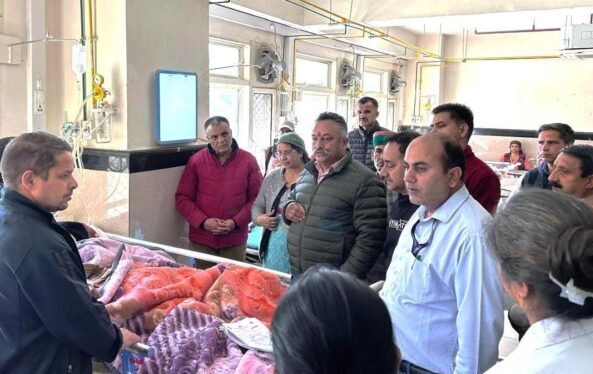
In Kangra district, a private bus travelling from Chamba to Una overturned near Nurpur after the driver reportedly fell unconscious at the wheel due to a heart attack. The incident left 28 passengers injured, with four in critical condition shifted from Nurpur to the medical college at Tanda.
A day earlier in Kullu district, four women teachers were killed when a tree fell on the Scorpio vehicle they were travelling in during inclement weather. The tragedy points to the compounded risk of natural hazards and driving behaviour in mountainous terrain.
The causes in both incidents, though different in nature, reveal avoidable dimensions. In Kullu, while the falling tree was triggered by bad weather, the possibility that the vehicle was being driven at a higher speed in such conditions cannot be ignored.
In hilly regions, reduced speed and heightened caution during storms significantly improve the chances of avoiding sudden obstacles like falling trees or debris. Even when such incidents occur abruptly, controlled driving can offer a margin of escape.
Also Read 4 women teachers killed, Bolero plunges into gorge in Ani-Kullu districtk
In Kangra, the driver’s sudden collapse at the wheel exposes a more systemic lapse. A medical emergency of this nature, particularly in public transport, underscores the absence or inadequacy of routine health screening and fitness assessment of drivers. The incident placed 28 lives at risk, demonstrating how a single point of failure can endanger many.
These back-to-back mishaps underline that vehicular movement during adverse weather must be regulated with greater caution, that speed on hill roads must be strictly moderated in line with terrain and conditions, that regular and mandatory health check-ups of drivers are essential before they are entrusted with passenger safety, and that vulnerable stretches of roads require closer assessment and monitoring to anticipate risks such as falling trees, landslides or sudden obstructions.
While inquiries have been initiated, the larger question remains whether such lessons will be absorbed into policy and practice. In fragile hill ecosystems, the difference between accident and safety often lies in preparedness, restraint, and enforcement rather than response after the event.
About the Author