Social audit reveals serious gaps in Chamba schools, raises concerns over quality of education

Photo source: Internet
Social audit reveals serious gaps in Chamba schools, raises concerns over quality of education
Chamba, June 18,
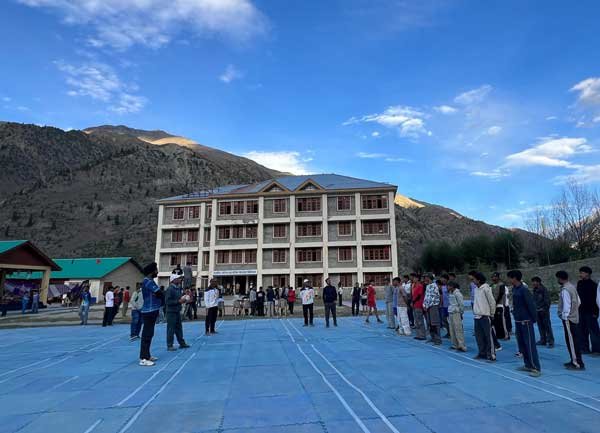
A social audit of government schools functioning under the Sarva Shiksha Abhiyan (SSA) in Chamba district has exposed major deficiencies in infrastructure, student safety, basic amenities and governance, raising concerns over the implementation of the Right to Education (RTE) Act in the district.
The findings were presented during a public hearing held in Chamba on Thursday, attended by over 600 stakeholders, including parents, teachers, School Management Committee (SMC) members, elected representatives and education department officials.
The audit was conducted by a team from Himachal Pradesh University (HPU) led by Dr. Randhir Ranta. The team surveyed 342 schools, accounting for nearly 20 per cent of the district’s 1,636 schools, including institutions in the remote tribal areas of Bharmour. The remaining schools will be covered in four subsequent phases.
Also Read Himachal Pradesh School Education dept issues notices to 250 teachers for poor class 10 results
Presenting the report, Dr. Ranta said the audit had highlighted numerous shortcomings affecting the delivery of quality education. He observed that the overall condition of school education in Chamba was unsatisfactory when assessed against the standards envisaged under the Right to Education Act.
According to the report, nearly one-third of the schools surveyed do not have adequate classroom space or sufficient rooms for teaching and non-teaching staff. Around half of the schools were found lacking adequate furniture, forcing many students to study without proper seating arrangements.
The audit identified student safety as another major concern. More than 50 per cent of schools do not have boundary walls or fencing. It also found that nearly 85 per cent of the schools are not connected by motorable roads, compelling students to travel long distances on foot and creating difficulties for children with disabilities.
Deficiencies in basic facilities were also reported. About 16 per cent of schools lack separate toilets for girls, while 17 per cent do not have drinking water facilities. Three per cent of the schools surveyed do not have kitchens for preparing Mid-Day Meals.
Members of the audit team pointed to serious gaps in menstrual hygiene management, noting that more than 90 per cent of schools do not provide sanitary pads to adolescent girls.
The report further revealed that none of the schools surveyed had access to professional counselling services. Facilities for children with special needs were found to be inadequate across all schools covered under the audit, raising concerns about inclusivity in education.
Library facilities were also found to be below prescribed standards in over 80 per cent of the schools. The audit additionally flagged weak monitoring mechanisms, stating that field-level education officials were not conducting school inspections as frequently as required under departmental guidelines.
The implementation of co-curricular and national integration programmes was also found lacking, with the audit noting that the “One Nation, Great Nation” programme was not being followed in a majority of schools.
During the public hearing, parents and community representatives demanded immediate corrective measures to improve infrastructure, strengthen monitoring systems, enhance transport connectivity and ensure greater accountability within the education department.
The findings of the social audit are expected to be submitted to the state education department for further action. Education experts at the hearing stressed that unless the identified shortcomings are addressed on priority, the goal of providing equitable and quality education to every child under the RTE framework would remain difficult to achieve in Chamba district.
About the Author

The HimachalScape Bureau comprises seasoned journalists from Himachal Pradesh with over 25 years of experience in leading media conglomerates such as The Times of India and United News of India. Known for their in-depth regional insights, the team brings credible, research-driven, and balanced reportage on Himachal’s socio-political and developmental landscape.