HC stresses ‘Golden Hour’, seeks State’s response on ensuring seamless access to AIMSS Chamiana
The Himachal Pradesh High Court has sought the State government's response on measures to ensure uninterrupted access to AIMSS Chamiana, stressing the importance of the Golden Hour in emergency medical care
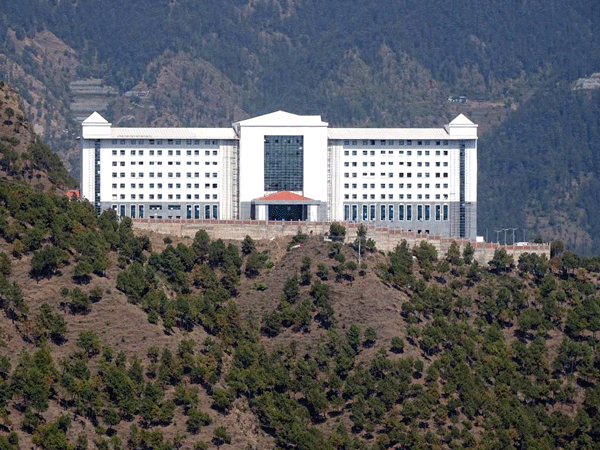
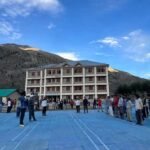
Photo source: Internet
HC stresses ‘Golden Hour’, seeks State’s response on ensuring seamless access to AIMSS Chamiana
Shimla, July 18,
Recognising that every minute can prove critical in saving lives during medical emergencies, the Himachal Pradesh High Court has sought the State government’s response to a series of suggestions aimed at ensuring uninterrupted access to the Atal Institute of Medical Super Specialities (AIMSS), Chamiana, amid concerns over traffic congestion along the Sanjauli corridor.
The issue came up during the hearing of a suo motu public interest litigation on July 16 before a Division Bench comprising Chief Justice G.S. Sandhawalia and Justice Bipin C. Negi. The Bench considered a set of suggestions placed by Amicus Curiae Bimal Gupta after being informed that traffic bottlenecks were affecting the movement of ambulances, patients, doctors and healthcare personnel travelling to the State’s premier super-speciality hospital.
The matter has assumed greater significance following the shifting of super-speciality departments and in-patient services from Indira Gandhi Medical College (IGMC), Shimla, to AIMSS Chamiana, making the Dhalli Tunnel-Sanjauli-Chamiana corridor one of the most critical emergency medical routes in the capital.
Among the suggestions placed before the court was restricting the entry of vehicles through the Sanjauli area during the morning peak hours between 8.30 am and 9.15 am, besides regulating traffic during the evening rush, to facilitate the unhindered movement of ambulances, doctors, hospital staff and patients travelling to AIMSS. The Advocate General sought time to obtain instructions from the State Government on the suggestions, following which the matter was adjourned to August 13.
Golden Hour under judicial focus
During the hearing, the Faculty Association of AIMSS submitted that recurring traffic congestion in Sanjauli was compromising adherence to the “Golden Hour” principle—the critical period immediately following a serious injury or medical emergency when prompt treatment can significantly improve the chances of survival and recovery.
The association also informed the court that prolonged traffic delays were resulting in the loss of thousands of productive man-hours of doctors and healthcare workers every day, besides affecting the timely delivery of specialised medical care.
Also read:IGMC AIIMS Chamiana Shimla: Lives at risk, warn Citizens group
Taking note of the submissions, the High Court recorded that the “Golden Hour” principle has been recognised by the Supreme Court in recent judgments, including S. Rajaseekaran vs Union of India and In Re: Phalodi Accident vs National Highways Authority of India, underscoring the importance of timely medical intervention during emergencies.
The issue assumes particular significance for a hill state like Himachal Pradesh, where mountainous terrain, narrow roads, monsoon-related disruptions and seasonal traffic congestion often pose additional challenges to emergency medical response. As advanced medical services become increasingly centralised at tertiary care institutions such as AIMSS Chamiana, ensuring seamless road connectivity assumes added importance for patients requiring specialised treatment.
Concerns over emergency transport and road connectivity
The Bench was also informed that only two emergency vehicles, operated by two drivers, are presently available to ferry patients between IGMC and AIMSS, making round-the-clock emergency transport difficult.
It was further submitted that directions issued by the High Court in 2016 regarding traffic management in the Sanjauli area could also be considered while evolving a long-term solution.
The Amicus Curiae further apprised the court that portions of the Bhattakuffer-Chamiana road had turned into water channels during the ongoing monsoon, hampering the movement of ambulances carrying critically ill patients. He also suggested restoring echocardiography (Echo) facilities at both IGMC and the Cancer Hospital so that patients are not required to travel between institutions for essential diagnostic investigations.
Temporary shelter for free meals permitted
In a separate development, the High Court permitted NGO Almighty Blessing to erect a temporary shed at AIMSS Chamiana for continuing its free meal service for patients and their attendants. During the hearing, the court was informed that the organisation has been providing similar charitable services at IGMC for the past 12 years, at Kamla Nehru Hospital for 10 years, and at AIMSS for the last eight months. The Bench clarified that the permission would not create any permanent rights and directed the NGO to maintain sanitation, cleanliness and waste management at the site.
On the issue of infrastructure, the court was informed that blacktopping of the Bhattakuffer-Chamiana road would be undertaken only after retaining walls and adequate drainage works are completed, as rain currently causes mud to slide from the adjoining hillside onto the road. The Bench directed the authorities to expedite the work and also explore the feasibility of laying underground electricity lines, provided it does not delay the road project.
With the State Government seeking time to respond to the various suggestions placed before the court, the matter has now been listed for further hearing on August 13.
About the Author

The HimachalScape Bureau comprises seasoned journalists from Himachal Pradesh with over 25 years of experience in leading media conglomerates such as The Times of India and United News of India. Known for their in-depth regional insights, the team brings credible, research-driven, and balanced reportage on Himachal’s socio-political and developmental landscape.