Glyphosate allegations put Thachi Forests in Mandi div under lens

Environment activist Guman Singh alleges widespread herbicide use to clear vegetation in higher mountain areas of Nachan Forest Division

Glyphosate allegations put Thachi Forests in Mandi div under lens
Mandi, Aug 18,
Allegations of widespread use of the herbicide glyphosate to clear natural vegetation for pea cultivation in higher mountain areas of Himachal Pradesh have raised concerns over the possible impact on forests, biodiversity and soil health.
Environment activist Guman Singh, based in Kullu district, has alleged that grass and other vegetation are being cleared through glyphosate spraying on forest and private land in high-altitude areas. He has urged local residents, farmers and media and social-media groups to investigate the practice and raise awareness about its possible environmental consequences.
In a subsequent communication, Singh specifically alleged that the use of glyphosate to remove forest grass and vegetation for pea cultivation is widespread at higher elevations in the Thachi Range of Nachan Forest Division in Mandi district.
According to Singh, pea cultivation has been undertaken after vegetation was cleared and burned through the use of herbicides. He further alleged that Forest Department officials have taken action against the pea crop but have failed to prevent the alleged use of glyphosate for clearing vegetation.
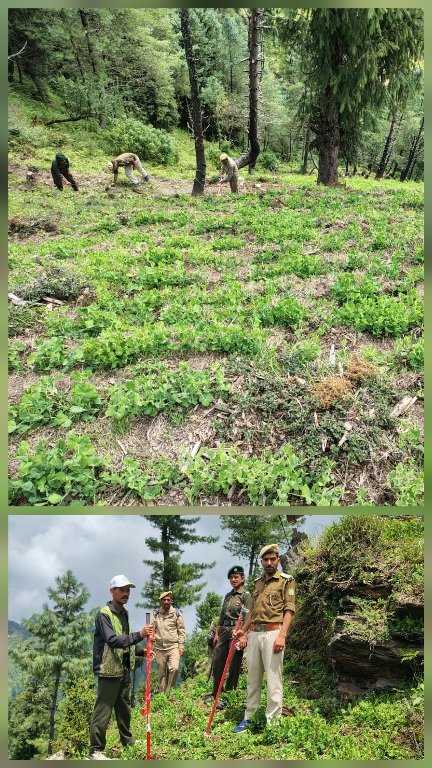
The allegations were accompanied by photographs purportedly showing areas where pea cultivation has taken place. The claims, however, have not been independently verified.
Environmental concerns
The issue assumes significance because earthworms and other soil organisms play an important role in maintaining soil structure, nutrient cycling and water infiltration.
A 2015 study published in Scientific Reports examined the effects of glyphosate-based herbicides on two earthworm species in a controlled greenhouse experiment. The researchers found that herbicide treatment substantially reduced the surface-casting activity of one earthworm species and reduced reproduction in both species.
The study also recorded a 1,592 per cent increase in plant-available nitrate and a 127 per cent increase in phosphate following herbicide application. The researchers warned that such nutrient pulses could increase the risk of nutrient leaching or runoff into groundwater and nearby aquatic ecosystems.
However, the study was conducted under controlled greenhouse conditions in Austria and does not establish what effects glyphosate spraying may have had in Thachi or elsewhere in Himachal Pradesh.
Questions that need answers
The allegations raise several questions that merit examination by the authorities.
If herbicides have been used to clear natural vegetation on forest land, it needs to be established who carried out the spraying, what chemical was used, whether its use was authorised and whether the land was legally available for agricultural cultivation.
It also needs to be established whether the photographs supplied by the activist correspond to locations within the Thachi Range and whether the pea cultivation shown in them is on forest land or privately owned land.
Singh has appealed to citizens and farmers to remain vigilant and report practices that could adversely affect mountain ecosystems.
The Forest Department’s response to the specific allegations, including whether it has identified or taken action against any such cultivation or herbicide use in the Thachi Range, is awaited.
Also read Himalayan Niti Abhiyan’ seeks Aerial survey after ‘Worst disaster of the century’ hits Mandi Seraj
For a mountainous state where forests, agricultural land, livestock and wildlife exist in close proximity, the alleged conversion of natural vegetation into cultivated areas through chemical clearing warrants independent verification and a transparent official response.
About the Author


The HimachalScape Bureau comprises seasoned journalists from Himachal Pradesh with over 25 years of experience in leading media conglomerates such as The Times of India and United News of India. Known for their in-depth regional insights, the team brings credible, research-driven, and balanced reportage on Himachal’s socio-political and developmental landscape.