Green-to-Gold economy: HP moves to legalise controlled hemp farming

Eyes Rs 2,000 crore revenue

Shimla, Dec 27,
In a move projected to significantly reshape rural livelihoods and add a new green revenue stream to the state exchequer, the Himachal Pradesh government has advanced its ambitious ‘Green to Gold’ initiative aimed at regulated industrial hemp cultivation. Chief Minister Thakur Sukhvinder Singh Sukhu said the policy would help shift Himachal’s economic narrative from illegal trade concerns to a globally competitive bio-economy, while also addressing growing agricultural distress in hill regions.
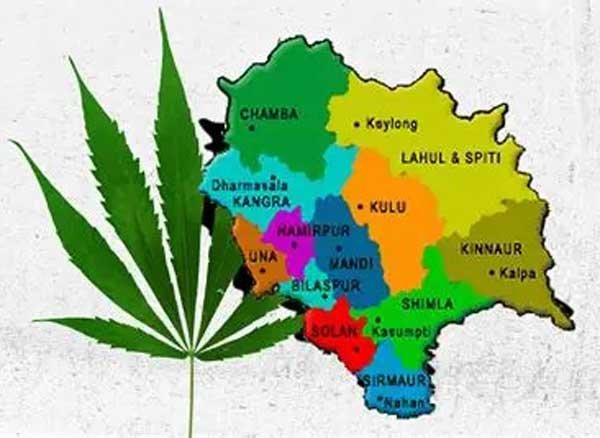
The Chief Minister said that cannabis has long grown wild in districts including Kullu, Mandi and Chamba, but its reputation has remained tied to narcotics rather than its industrial and medicinal potential. “With proper regulation and awareness, hemp can become a key driver of eco-friendly industrial development, especially in hill and rural economies like Himachal Pradesh,” he said.
A strict scientific regulatory mandate remains central to the policy. Only hemp varieties containing less than 0.3 per cent Tetrahydrocannabinol (THC) — the psychoactive component — will be permitted, ensuring that the crop is entirely unsuitable for misuse as a drug. This threshold aligns with global standards for industrial hemp, while enabling high-value production of fibre, seeds and plant extracts for multiple sectors including pharmaceuticals, wellness products, textiles, biodegradable packaging and bio-energy.
The pilot phase of controlled cultivation received Cabinet clearance on 24 January 2025 and is expected to be rolled out soon. Sukhu said farmers increasingly abandoning traditional crops due to wildlife damage can adopt industrial hemp as a viable, climate-resilient alternative. Officials believe regulated cultivation can eventually generate Rs 1,000 crore to over Rs 2,000 crore annually, reducing dependence on imports currently servicing India’s growing hemp-based product demand.
The crop’s economic potential is coupled with environmental advantages. Industrial hemp reportedly requires about 50% less water than cotton and can thrive in marginal soils where existing crops fail, positioning it as a solution for regions vulnerable to climate change. To strengthen the scientific foundation, CSK Himachal Pradesh Krishi Vishvavidyalaya, Palampur, and Dr Y.S. Parmar University of Horticulture and Forestry, Nauni, are conducting research to develop high-yield seeds adapted to the Himalayan terrain.
A state-level expert committee chaired by Revenue Minister Jagat Singh Negi has already assessed legal and regulatory models in Uttarakhand and Madhya Pradesh, where controlled cannabis cultivation is underway. Based on its findings, the committee recommended regulated cultivation for industrial, scientific and medicinal use — a report that was accepted during the Assembly session.
The government’s long-term “Hemp-Hub” vision envisages Himachal emerging as a manufacturing centre for carbon-negative construction material “Hempcrete”, specialised textile products and Ayurvedic medicinal derivatives. The Chief Minister said the initiative would accelerate the state’s goal of becoming one of India’s most prosperous by 2032 while opening a new ecosystem for start-ups and youth entrepreneurship.
“We are not promoting addiction. We are promoting a modern industry,” Sukhu asserted, adding that the focus is to ensure Himachal’s natural wealth benefits farmers and the state — not illicit networks that have profited from the black market for decades.
About the Author


The HimachalScape Bureau comprises seasoned journalists from Himachal Pradesh with over 25 years of experience in leading media conglomerates such as The Times of India and United News of India. Known for their in-depth regional insights, the team brings credible, research-driven, and balanced reportage on Himachal’s socio-political and developmental landscape.