HC seeks state, centre reply on PIL against STP near Gambhar khud source

HC seeks state, centre reply on PIL against STP near Gambhar khud source
Shimla, July 2,
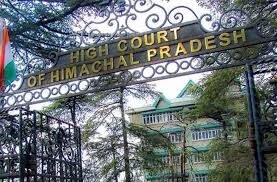
Himachal Pradesh High Court has sought responses from the State Government, the Union of India and other respondents on a public interest litigation challenging the construction of a Sewerage Treatment Plant (STP) near the origin of Gambhar Khud in Bharyal village, with the petitioners alleging that the project poses a serious threat to a natural drinking water source.
A Division Bench comprising Chief Justice G.S. Sandhawalia and Justice Bipin C. Negi issued notice on the PIL filed by Seema Kumari and others and directed all respondents to file their replies before the next hearing on August 19.
Appearing for the petitioners, advocate Vishwa Bhushan submitted that a Solid Waste Treatment Plant (SWTP) has already been operating at Bharyal since 2006 after obtaining No Objection Certificates (NOCs) from the Airport Authority of India and the Himachal Pradesh State Pollution Control Board.
He argued that the construction of another Sewerage Treatment Plant adjacent to the existing solid waste facility would further endanger Gambhar Khud, a tributary that serves as an important source of drinking water for downstream areas.
The petition referred to photographs placed on record, claiming they clearly show water flowing from the proposed construction site into Gambhar Khud through the natural slope, raising apprehensions that any leakage or discharge from the STP could contaminate the watercourse.
According to the petitioners, the authorities granted clearance for the project without carrying out a comprehensive environmental impact assessment of its likely effect on the fragile ecosystem and water source.
They argued that permitting both solid and liquid waste treatment facilities at the same location could have serious environmental consequences and described the decision as a “recipe for disaster” unless adequate safeguards are ensured.
The PIL also highlighted the alleged poor track record of sewerage treatment plants around Shimla, referring to past instances in which untreated or inadequately treated sewage reportedly polluted Ashwani Khud.
It contended that rapid urbanisation around the state capital is putting increasing pressure on natural water sources while regulatory authorities have failed to enforce pollution control norms effectively.
Taking note of the submissions, the High Court issued notice to the State Government, the Union of India and other respondents and listed the matter for further hearing on August 19.
About the Author