Himachal’s fiscal deficit breaches prescribed limits; 86 pc revenue spent on salaries, pensions, subsidies
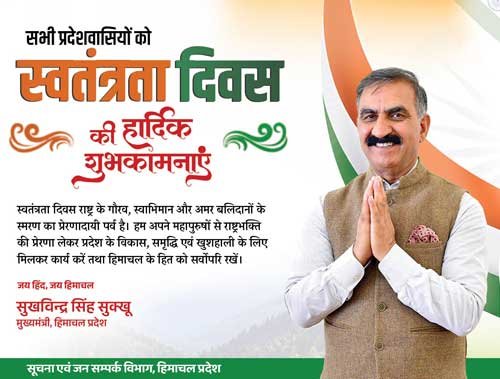
Image used for indicative purpose only. Source: Internet
Shimla, Sep 3
Comptroller and Auditor General of India (CAG) has painted a worrying picture of Himachal Pradesh’s financial health, flagging the rising debt burden, breach of prescribed fiscal deficit limits and shrinking fiscal space for developmental and capital expenditure.
The CAG report on the State Finances for 2024-25, tabled in the Himachal Pradesh Assembly by Chief Minister Sukhvinder Singh Sukhu, said the State’s fiscal deficit had crossed the limits prescribed under the Fiscal Responsibility and Budget Management (FRBM) framework.
The revenue deficit stood at Rs 6,804.61 crore, equivalent to 2.94 per cent of the Gross State Domestic Product (GSDP), while the fiscal deficit touched Rs 12,611.05 crore, or 5.44 per cent of the GSDP.
According to the report, the State failed to keep both deficits within the targets prescribed under the FRBM Act. Its outstanding liabilities were also significantly higher than the targets recommended by the 15th Finance Commission as well as the State’s own budget estimates.
The audit report said as much as 86 per cent of the State’s total revenue receipts was consumed by committed expenditure and subsidies, leaving limited resources for infrastructure development and capital investment.
Salaries, pensions and gratuity alone accounted for around 70 per cent of revenue expenditure, it said.
The CAG also expressed concern over increasing expenditure on power subsidies and debt-relief measures, observing that such commitments were putting additional pressure on the State’s finances.
With only around 14 per cent of revenue resources available for developmental activities and capital expenditure, the State faces severe constraints in creating infrastructure and undertaking long-term investments, the report noted.
The CAG said Himachal Pradesh’s economy grew by 9.20 per cent during 2024-25. However, its contribution to India’s GDP remained at only 0.70 per cent and had declined over the past five years, which the auditor termed a matter of concern.
Revenue receipts increased by 4.34 per cent during the year, aided by Goods and Services Tax collections and the State’s share in central taxes. Non-tax revenue also registered a growth of 22.40 per cent.
Despite improvement in some revenue streams, the State continued to remain heavily dependent on grants from the Centre, the report said.
The CAG also flagged irregularities in the management of government funds, observing that collections through levies such as milk cess, environment cess and Building and Other Construction Workers Welfare Cess were kept outside the government account.
This, according to the audit, was in violation of Article 266 of the Constitution, which governs the Consolidated Fund and Public Account of the Union and the States.
Read Also
The auditor further pointed to delays in submission of utilisation certificates by local bodies, departmental undertakings and autonomous institutions.
It also expressed concern over the excessive use of the budget head ‘Object Head 20 – Other Charges’, stating that such practices affected transparency in financial reporting.
The CAG, however, acknowledged the implementation of the Single Nodal Agency (SNA) and SNA SPARSH mechanisms for tracking funds under centrally sponsored schemes as a positive development, while noting that their full implementation was still pending.
Warning of the long-term implications of rising debt and limited capital investment, the CAG advised the State government to strengthen revenue mobilisation, exercise greater expenditure control and undertake structural reforms to restore fiscal stability.
The findings come at a time when the Sukhu government has been projecting efforts to improve the State’s financial position as part of its broader agenda of bringing “system change” in governance and administration.
About the Author