Shimla, Jan 26,
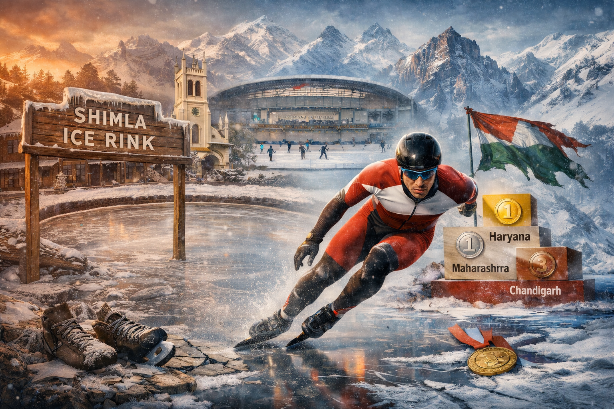
At a time when ice skating was a novelty in most parts of Asia, Shimla stood tall as its unlikely cradle in India. The open-air ice skating rink in the heart of the hill town was once the only such facility not just in the country, but across much of South East Asia. For decades, it symbolised Himachal Pradesh’s natural advantage in winter sports — climate, altitude and tradition working in rare harmony.
Yet, more than a century later, that early lead has quietly slipped away.
The story of ice skating in Himachal Pradesh today is less about heritage and more about missed opportunities. While the state still boasts history and natural conditions, it lags significantly in modern infrastructure — a gap that becomes glaring when viewed against national competition results. The Khelo India Winter Games offer a stark reality check. Himachal Pradesh is now struggling to even register a consistent presence in the medal tally, while states and Union Territories with no natural ice legacy — Haryana, Maharashtra, Chandigarh and Telangana — routinely dominate headlines with of course Ladakh.
This decline is not accidental. It is the result of decades of delayed investment, absence of long-term vision and an over-reliance on nostalgia. The Shimla rink, once iconic, remained largely unchanged while the sport globally moved towards safer, regulated and artificial ice surfaces that allow year-round training. As a result, generations of athletes from Himachal were left without competitive exposure, modern coaching or scientific training support.
There have been attempts to course-correct. The high-altitude cold desert of Spiti has recently emerged in conversations around winter sports potential, thanks to its long freezing periods and natural ice formations. Informal skating activity and training camps have begun to appear in parts of Lahaul–Spiti, indicating what is possible if planning meets policy. But these efforts remain fragmented — promising, yet far from transformative.
That contrast becomes sharper when placed alongside recent national developments. Noted ice skater Vishwaraj Jadeja, who has spent nearly two decades in the sport, credits initiatives like Khelo India for triggering genuine infrastructure growth in India. He points to the emergence of Olympic-size artificial rinks in places like Leh and Dehradun — facilities that simply do not exist in Himachal despite its historical head start. Importantly, Jadeja has acknowledged that for the first time, India now has safe, competition-ready ice tracks — something that was missing for years.
His optimism about India hosting major winter events in the next decade is telling. It underlines a larger truth: winter sports in India are moving forward, just not uniformly. Regions that aligned early with infrastructure, institutional backing and athlete welfare are now reaping results. Those that relied solely on geography are falling behind.
Himachal Pradesh’s performance — or lack of it — at Khelo India Winter Games is not merely a sporting statistic. It is evidence of systemic neglect. When a state that once defined ice skating in the region struggles to stay relevant, it raises uncomfortable questions about governance, priorities and vision.
The lesson is clear. Legacy alone cannot win medals. Infrastructure, sustained investment and athlete-centric planning can. Until Himachal acts decisively, its historic ice rink will remain a symbol — not of leadership, but of lost potential.
About the Author

The HimachalScape Bureau comprises seasoned journalists from Himachal Pradesh with over 25 years of experience in leading media conglomerates such as The Times of India and United News of India. Known for their in-depth regional insights, the team brings credible, research-driven, and balanced reportage on Himachal’s socio-political and developmental landscape.