Safer street food on agenda as HP trains Vendors and pushes for better facilities


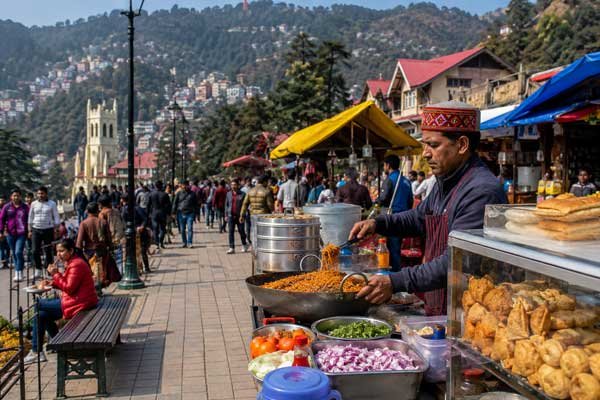
Photo used for indicative purpose only
Safer street food on agenda as HP trains Vendors and pushes for better facilities
Shimla/Mandi, June 9,
Himachal Pradesh Food Safety Department, in partnership with the National Association of Street Vendors of India (NASVI) and Nestlé India, has expanded the ‘Sarv Safe Food’ initiative across the state.
Under the programme, 1,000 street food vendors from the districts of Mandi, Kullu, Kangra, Una and Shimla would receive training in food safety, hygiene and best practices for food handling.
The initiative is designed to enhance standards of public health, sanitation, waste management and food safety among street vendors.
With this latest phase, the total number of vendors trained under the programme in Himachal Pradesh will exceed 4,500. Since its inception in 2016, the initiative has benefited more than 1.2 lakh vendors nationwide.
Rural Development and Panchayati Raj Minister Anirudh Singh stated that Himachal Pradesh’s vibrant street food culture plays a significant role in supporting the state’s tourism sector, and that efforts are being undertaken to strengthen the ecosystem through improved safety and hygiene standards.
Representatives from Nestlé India noted that the programme aims to foster sustainable behavioural change while enhancing the livelihoods of street vendors.
Also read:State Government to deliberate on Street Vendor Policy amid controversy over nameplates
While the training programme addresses critical aspects of food hygiene and consumer protection, experts emphasize that food safety is also closely linked to the availability of secure and well-regulated vending spaces.
In several hill towns, including Shimla, vendors often operate in congested areas, narrow pedestrian pathways and crowded marketplaces due to the limited availability of properly developed vending zones.
The broader issue of vendor welfare recently gained attention following the death of a street vendor during a Municipal Corporation anti-encroachment operation in Shimla.
The incident resulted in the registration of an FIR based on a complaint filed by the vendor’s brother and prompted wider discussions regarding the working conditions and safety of street vendors.
Following allegations of increasing encroachment on public streets and pedestrian spaces, authorities constituted a committee to examine the issue and recommend measures for creating safer, more secure and better-regulated vending areas.
The committee is expected to assess existing vending arrangements and suggest solutions that balance the interests of vendors, pedestrians and urban management authorities.
Shimla, Kullu, Manali and Mandi district s record large numbers of tourists and street food like momos, tea, samosa, bread sandwich, Golgapp, Channa bhatura, Chaumin etc are becoming popular hots spots. Out side hospital food vans also serves street launch and breakfast and tea in such places where main market are to much away from the parkings.
These street food vendors needs regulations as it might address the quality of fiid, hygiene and disposal of wast and its disposal.
Normally such food vendors are considered Encroachers on public places but without vending zones and regulations to allow needy people to earn humble livilhood on the street would create a conflict of interest between vendrs anf others lobbies including local small hotel and eateries.
Stakeholders maintain that, in addition to food safety training, urban local bodies should prioritize the development of designated vending zones equipped with sanitation facilities, waste management systems and essential public amenities. Such interventions would help ensure safer and more hygienic food services for consumers while providing a secure, organized and dignified working environment for thousands of street vendors across Himachal Pradesh.
About the Author


The HimachalScape Bureau comprises seasoned journalists from Himachal Pradesh with over 25 years of experience in leading media conglomerates such as The Times of India and United News of India. Known for their in-depth regional insights, the team brings credible, research-driven, and balanced reportage on Himachal’s socio-political and developmental landscape.