Shimla, Dec 24,
A deeply troubling episode of man–animal conflict unfolded in the Balh Valley of Mandi district, where an ageing leopard died after a chain of events rooted not in aggression, but in displacement, exhaustion, and fear — on both sides of the forest edge.
Forest officials said the leopard, found dead following violent encounters in human settlements, was old, injured and physically weakened. Preliminary field assessments suggest the animal had been forced out of its natural territory after a prolonged and violent territorial clash with a younger leopard, leaving it wounded, disoriented and unable to retreat deeper into the forest.
In that vulnerable state, the animal strayed into villages of the Balh Valley — not in search of prey, but refuge.
Officials of the Himachal Pradesh Forest Department stressed that the leopard’s behaviour was defensive rather than predatory. “The animal was under extreme stress, injured and exhausted. When cornered by crowds, it reacted instinctively,” a senior wildlife officer said, explaining the sequence of attacks that left several villagers injured.
As panic spread through the settlements, fear quickly escalated into retaliation. Villagers, alarmed by repeated sightings and sudden attacks, allegedly assaulted the animal with sticks and stones. Even after sustaining critical injuries, the leopard continued to move through habitations, injuring nearly half a dozen people in what officials described as its final desperate attempts to escape.
The situation stabilised only after forest personnel were alerted and reached the area.
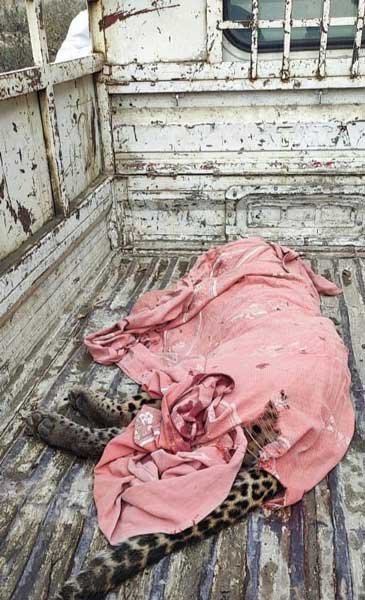
The leopard later succumbed to multiple injuries. Its carcass, bearing clear signs of trauma, was recovered by the department and disposed of following prescribed wildlife protocols, including ceremonial rites — a symbolic acknowledgement of the loss of a protected species.
Forest authorities described the incident as a stark reminder of how shrinking habitats and territorial stress among wild animals are increasingly spilling into human spaces. “This was not an unprovoked attack,” an official noted. “It was a breakdown of ecological balance, where an animal already defeated in the wild found no safe exit in the human landscape.”
Beyond the immediate injuries and loss of life — human and animal — the episode exposes the growing fragility of forest fringes in Himachal Pradesh, where expanding settlements, depleted prey bases and inter-animal conflicts are pushing wildlife into dangerous proximity with people.
What remains largely unseen, officials caution, is the silent suffering that often precedes such encounters — the displacement, injuries and hunger that turn fear into fatal confrontation.
As Balh returns to uneasy calm, the incident leaves behind uncomfortable questions about coexistence, preparedness, and whether the forest still has enough space for those who belong to it most.
About the Author

The HimachalScape Bureau comprises seasoned journalists from Himachal Pradesh with over 25 years of experience in leading media conglomerates such as The Times of India and United News of India. Known for their in-depth regional insights, the team brings credible, research-driven, and balanced reportage on Himachal’s socio-political and developmental landscape.