Satluj glaciers shrink by 97.6 sq km in two decades, raising concerns over hydropower and GLOF risks


Satluj glaciers shrink by 97.6 sq km in two decades, raising concerns over hydropower and GLOF risks
Shimla, Sept 19,
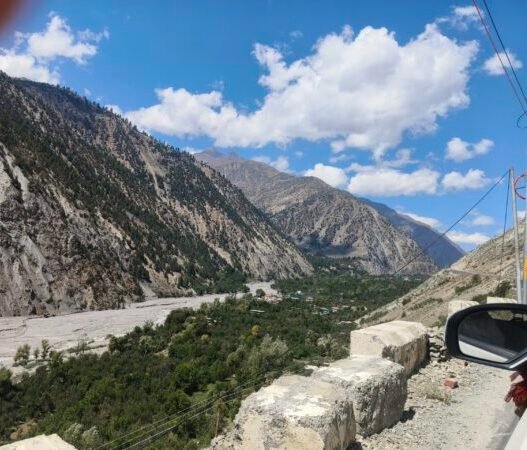
Glaciers feeding the Satluj river in Himachal Pradesh have lost nearly 98 square kilometres of ice-covered area in two decades, with a large majority of monitored glaciers showing a negative mass balance, raising concerns over the long-term availability and seasonal reliability of water for the Satluj hydropower system.
The findings are contained in a comprehensive study on the impact of climate change on water-flow patterns affecting hydropower generation, prepared by the State Centre on Climate Change (SCCC) under the Himachal Pradesh Council for Science, Technology and Environment (HIMCOSTE) and submitted to Satluj Jal Vidyut Nigam Limited (SJVNL) in January 2026. The study analysed satellite data and hydrological records for the period 2000-2020.
The study records a decline in the total glacier area of the Satluj basin from 1,481.75 sq km in 2000 to 1,384.16 sq km in 2020, a loss of 97.59 sq km or about 6.6 per cent. The assessment covers the Spiti, Baspa, Lower Satluj and Upper Satluj sub-basins.
More worrying is the deterioration in glacier mass balance. Of the 1,120 glaciers assessed in 2020, only 245 had a positive mass balance while 875 had a negative mass balance. In 2000, the corresponding figures were 555 glaciers with positive balance and 565 with negative balance. The findings indicate a marked shift towards net ice loss over the two decades.
The retreat is particularly pronounced in parts of Spiti and Upper Satluj. The study found that 1,005 of 1,699 glaciers and glacierets assessed for terminus movement showed retreat. Of these, 800 were retreating at less than 10 metres a year, 155 at 10-20 metres, 44 at 20-40 metres and six at more than 40 metres a year. One glacier in the Spiti sub-basin was found to be retreating at 73.7 metres a year, while another in the Lower Satluj was receding at 60 metres a year.
The report also cautions against interpreting the rise in the number of mapped glaciers as evidence of glacier growth. The inventory recorded 1,699 glaciers and glacierets in 2000 and 1,709 in 2020, but the study attributes the increase largely to fragmentation of larger glaciers into smaller ice bodies, rather than the formation of new glaciers.
The implications extend directly to Himachal’s hydropower sector. The study notes that snow and glacier melt account for a substantial share of Satluj discharge and that the basin hosts major projects including Nathpa Jhakri (1,500 MW), Karcham Wangtoo (1,091 MW), Baspa-II and Rampur. Changing snowfall, earlier snowmelt, declining glacier mass and increasingly variable flows are making water availability, sediment load and hydropower output less predictable.
The study points to a paradox for hydropower generation. Accelerated melting can initially increase summer and early-monsoon inflows, potentially benefiting reservoir-based projects. But continued loss of glacier volume will eventually reduce meltwater availability during lean periods, affecting firm power generation and reservoir operations. Increased sediment from deglaciated and unstable terrain could also reduce reservoir storage, increase turbine abrasion and raise maintenance costs.
The SCCC study has also identified a growing hazard dimension. It notes that the Satluj basin contains expanding proglacial lakes in the Spiti-Kinnaur region and warns that accelerated glacier retreat increases the susceptibility to GLOFs, landslides and slope instability. Such events could threaten hydropower infrastructure as well as downstream roads, bridges and settlements.
Also Read HIMCOSTE report sheds light on factors contributing to Krishna Nagar and Lalkothi Phagli incidents
The warning assumes greater relevance following the catastrophic Himalayan disaster in Nepal in August this year. However, the recent Nepal event should be described accurately: available scientific analysis indicates that the August 26 disaster involved a massive glacier and rock collapse, rather than a conventional glacial lake outburst flood. The collapse generated a destructive flash flood across the Nepal-China border region.
The Nepal disaster nevertheless underlines the type of cascading mountain hazards that can arise as glaciers retreat and high-altitude slopes and lakes become increasingly unstable. A recent scientific study of the 2024 Thame GLOF in Nepal has separately documented how the outburst of one small glacial lake triggered the failure of another downstream lake, releasing about 770,000 cubic metres of water and sending a flood wave to the village within roughly 22-25 minutes.
For the Satluj basin, the SCCC study recommends continuous satellite-based monitoring of glaciers and snow cover, improved hydrological forecasting, climate-informed modelling and adaptive management of hydropower projects. Its concluding assessment describes the Satluj as a priority climate-action region, given its dependence on snow and glacier melt for long-term water and energy security.
About the Author