The Supreme Court, ADR and the Future of India’s Electoral Democracy


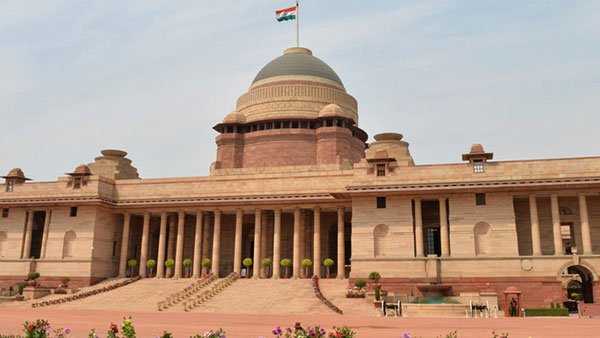
Photo used for indicative purpose only. Source internet
Shimla, July 30
When mainstream media here is busy revealing or comparing wealth declared by all Chief ministers of North Indian state puting Congress Chief minister Sukhvinder Singh Sukhu among the clubs of wealthiest CMs in India or quoting ADR’s four years old data, an important piece of Indian election litigation are under SCI hammer being shadowed.
Supreme Court is expected to pronounce an interim order in one of the most significant constitutional challenges relating to India’s electoral system, this petition was filed by the Association for Democratic Reforms (ADR) has become much more than a dispute over appointments of Chief Election Commission.
It raises a fundamental constitutional question: who should safeguard the independence of the Election Commission of India, the institution entrusted with conducting free and fair elections in the world’s largest democracy?
The case challenges the constitutional validity of the Chief Election Commissioner and Other Election Commissioners (Appointment, Conditions of Service and Term of Office) Act, 2023, enacted by Parliament after a Constitution Bench of the Supreme Court had, in March 2023, directed that Election Commissioners be appointed by a committee comprising the Prime Minister, the Leader of the Opposition and the Chief Justice of India until Parliament enacted a law.
The 2023 legislation replaced the Chief Justice of India with a Union Cabinet Minister nominated by the Prime Minister, thereby giving the executive two members in the three-member selection committee. ADR has contended that this fundamentally alters the balance envisaged by the Constitution Bench and substantially weakens the independence of the Election Commission.
The matter assumed additional significance when Chief Justice of India Justice Surya Kant recused himself from hearing the case on March 20, 2026. Observing that the challenge directly concerned the office of the Chief Justice, he considered it appropriate not to be part of the Bench so that no allegation of conflict of interest could arise. The case was thereafter assigned to a Bench comprising Justice Dipankar Datta and Justice Satish Chandra Sharma, which has heard extensive arguments from all sides.
The hearings have witnessed detailed constitutional submissions from some of the country’s leading jurists. Senior Advocate Gopal Sankaranarayanan argued that the 2023 Act effectively gives the executive overwhelming control over appointments to the Election Commission, defeating the objective of institutional independence. Senior Advocate Prashant Bhushan, appearing for ADR, submitted that removing the Chief Justice from the selection committee eliminates the only neutral constitutional authority from the appointment process and undermines public confidence in the Election Commission.
During the proceedings, the Bench itself questioned the rationale behind excluding the Chief Justice while retaining the Leader of the Opposition. The judges observed that the Chief Justice continues to be part of the committee selecting the Director of the Central Bureau of Investigation and asked whether the new law merely creates a “show of independence” rather than genuine institutional autonomy.
The Union Government, however, defended the legislation by arguing that Parliament possesses the constitutional authority to determine the appointment process through legislation and that the Supreme Court’s earlier directions were intended only to operate until Parliament enacted a law.
Whatever the final outcome, the Court’s decision is likely to define the contours of institutional independence for decades.
The significance of ADR’s intervention becomes clearer when viewed against its three-decade-long contribution to electoral reforms. Through strategic litigation, research, public campaigns and voter awareness programmes, ADR has transformed electoral transparency in India. Its petitions compelled disclosure of candidates’ criminal records, financial assets and educational qualifications. It has consistently advocated reforms in political funding, inner-party democracy and greater accountability in public life.
ADR has also remained active beyond the courtroom. During 2026 alone, it organised discussions at Lady Shri Ram College, Aligarh Muslim University, the International Institute of Information Technology Bangalore, the School of Democracy at Palampur and the Policy Leadership Programme. These programmes addressed money power in elections, informed voting, electoral reforms and the role of youth in strengthening democratic institutions. Simultaneously, its state chapters released analytical reports on Assembly elections and organised press conferences in Bengaluru, Chennai and Kolkata examining criminal cases, financial disclosures and other details relating to electoral candidates.
The present litigation also unfolds amid an atmosphere of growing public debate over the functioning of India’s electoral system. Questions have increasingly been raised by opposition parties, civil society organisations and election observers regarding electoral roll revisions, campaign finance, institutional neutrality and the overall fairness of electoral administration.
The controversy surrounding the Special Intensive Revision (SIR) of electoral rolls has added another dimension to this debate. During proceedings concerning West Bengal, the Supreme Court was informed that the revision exercise had resulted in an unusually large number of claims, objections and deletion orders affecting voters. The Court subsequently directed that appeals against deletion of names should be heard by judicial forums rather than solely by election authorities, recognising the importance of ensuring an independent mechanism for adjudicating disputes over voting rights.
Political parties and civil society groups have alleged that nearly 25 lakh voters were affected during the revision process in West Bengal. The Election Commission has rejected allegations of political bias and maintained that revisions are conducted strictly in accordance with law. The issue remains politically contested and has become another reason why institutional credibility has emerged as a central theme in discussions on electoral reforms.
Similarly, debates surrounding Electronic Voting Machines, the security of strong rooms, campaign finance, unequal media access and the concentration of political messaging continue to generate public discussion. While the Election Commission has consistently rejected allegations questioning the integrity of EVMs and electoral procedures, these issues underline the importance of maintaining public confidence in institutions responsible for conducting elections.
The role of the judiciary assumes particular importance in this context. Constitutional courts are often called upon not to determine electoral outcomes but to ensure that constitutional institutions function independently and command the confidence of all stakeholders. The present case, therefore, extends beyond the composition of a selection committee. It concerns the constitutional architecture that protects democratic legitimacy.
Also read
Balbir Verma of BJP among the ‘Wealthiest’ candidate in HP polls
India’s constitutional democracy has repeatedly evolved through judicial intervention, legislative action and sustained engagement by civil society organisations. ADR’s continuing campaign for electoral reforms represents one of the most enduring examples of that democratic engagement.
The Supreme Court’s forthcoming decision will not merely determine the validity of a statutory provision. It will indicate how the constitutional balance between executive authority and institutional independence should be maintained in one of the Republic’s most vital constitutional bodies.
Also read
HC orders faster debris clearance in Kinnaur, seeks fresh status report
In a democracy, electoral legitimacy rests not only upon the counting of votes but upon citizens’ confidence that every stage of the electoral process—from voter registration to the declaration of results—is conducted by institutions that are impartial, transparent and independent.
The judgment in ADR’s challenge will therefore be remembered not simply as another constitutional ruling, but as an important milestone in the continuing evolution of India’s democratic institutions.
About the Author