When protest becomes the only language governments hear
When protest becomes the only language governments hear
Shimla, June 27,
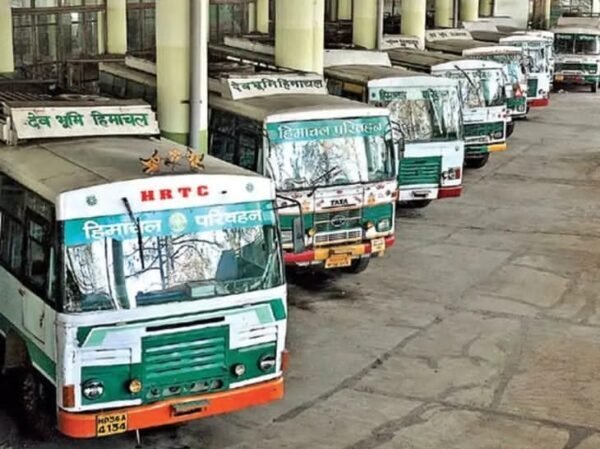
The withdrawal of the proposed strike by employees of the Himachal Road Transport Corporation (HRTC) once again raises an uncomfortable question: Do governments respond to genuine grievances only when employees and citizens resort to protests?
India has a well-defined legal and administrative framework for resolving disputes. Employees can approach departmental authorities, labour commissioners, tribunals and courts. Citizens can seek remedies through public representatives, grievance portals and the judiciary. Yet, in practice, many long-pending issues remain unresolved until they evolve into public agitations.
The HRTC episode is a recent example. Employees had been demanding payment of pending medical reimbursements, overtime dues, uniform allowance and settlement of other financial liabilities for several months. Their unions repeatedly raised these issues through representations. However, meaningful progress became visible only after employees announced an indefinite strike.
Initially, the government’s response was to invoke the Essential Services Maintenance Act (ESMA) to prevent disruption of public transport. It also explored contingency measures by engaging temporary drivers to maintain bus operations. The confrontation appeared headed towards a prolonged deadlock.
Also Read HRTC employees call of strike state assures release pending dues
But as the strike drew closer and concerns mounted over disruption of transport services across Himachal Pradesh, the government invited the employees’ representatives for talks. The negotiations produced an immediate breakthrough. The government assured the release of nearly half of the pending financial liabilities in the first phase, agreed to suspend disciplinary proceedings initiated against protesting employees and promised to place issues relating to regularisation and pay fixation of drivers and conductors before the HRTC Board.
Soon afterwards, acting on the directions of the Chief Minister, the government released Rs 20 crore towards pending medical reimbursement claims—Rs 13 crore for pensioners and Rs 7 crore for regular employees. The amount cleared pending medical reimbursement claims up to March 2026, benefiting around 11,000 employees and nearly 8,000 pensioners. The government also indicated that additional funds would be released to meet remaining liabilities.
The sequence of events naturally raises a question. If financial resources could be arranged within days after the strike call, why were the dues allowed to accumulate for months? Could timely dialogue have avoided the confrontation altogether?
The HRTC dispute is not an isolated instance. Across the country, workers, students and citizens increasingly believe that routine representations receive little attention, whereas protests compel governments to act. The controversy surrounding the conduct of competitive examinations, including NEET, has repeatedly triggered demonstrations demanding accountability. Midday meal workers, Anganwadi workers, ASHA workers and contract employees in several states have often taken to the streets after prolonged delays in addressing demands relating to wages, honorarium and service conditions.
This does not mean every protest is justified or that governments should concede every demand. Public administration requires balancing fiscal discipline, legal obligations and public interest. Equally, employees providing essential services have responsibilities towards the public. However, democratic governance depends on continuous dialogue, not confrontation.
When governments respond only after protest deadlines are announced, they inadvertently reinforce the perception that agitation is more effective than institutional grievance redressal. That weakens confidence in established mechanisms and encourages future disputes to begin where they should ideally end—on the streets.
The HRTC settlement demonstrates that dialogue remains the most effective way to resolve industrial disputes. Yet it also highlights the need for governments to institutionalise regular consultations with employees’ organisations and address genuine grievances before they escalate into crises.
In a democracy, protest is a constitutional right and an important instrument of public accountability. But it should remain the last resort, not the most reliable path to securing administrative action. The true measure of responsive governance lies not in how efficiently it resolves protests, but in how effectively it prevents the need for them in the first place.
About the Author