Shimla, Aug. 7
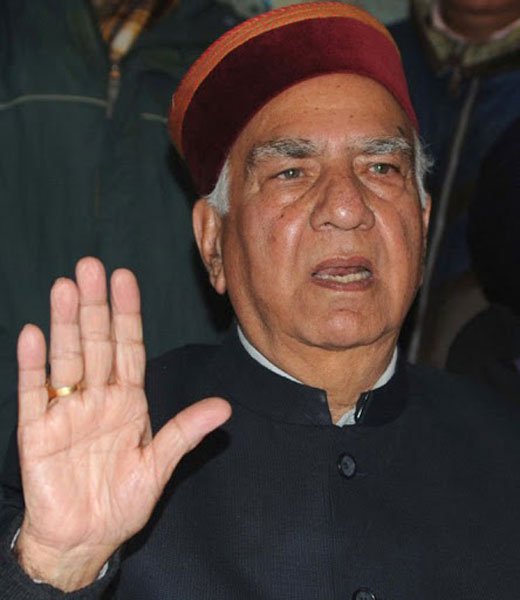
At a time when the Union Government is preparing to bring legislation to increase the number of seats in the Lok Sabha, former Himachal Pradesh Chief Minister and former Union Minister Shanta Kumar has raised concerns over the functioning of Parliament, questioning what he described as the wasteful expenditure of public money on repeated disruptions and renewing his long-standing demand for a “no work, no pay” policy for Members of Parliament.
In a statement issued recently, the veteran BJP leader said India was the world’s largest democracy, built on the sacrifices of thousands of freedom fighters who laid down their lives for the nation. He, however, expressed concern that the democratic values established through those sacrifices appeared to be weakening.
Shanta Kumar said Parliament, which should be the country’s highest forum for debate and lawmaking, was increasingly witnessing uproar instead of meaningful discussion. He said several parliamentary sessions had passed with little or no debate, while many important Bills were approved without adequate discussion.
Drawing a contrast between the freedom movement and present-day politics, he said politics during British rule was centred on the nation, with revolutionaries such as Bhagat Singh embracing the gallows for the country’s freedom. In contrast, he remarked that politics in independent India was increasingly becoming focused on power and self-interest.
The former Union Minister questioned the large expenditure incurred on the functioning of Parliament, saying crores of rupees of public money were spent on every session. He said even when proceedings were repeatedly disrupted by sloganeering and protests, MPs continued to receive salaries and allowances.
“Parliament is meant for discussion, and salaries and allowances are meant for work,” he said while reiterating his demand that the principle of “no work, no pay” should be implemented in Parliament.
He maintained that MPs responsible for disrupting proceedings and preventing the House from functioning should not receive salaries or allowances for the period during which Parliament remained non-functional.
Shanta Kumar also made a sharp observation on the functioning of the House, saying Parliament appeared to remain orderly only on two occasions — during obituary references to departed leaders and when proposals to increase the salaries and allowances of MPs were taken up.
On most other occasions, he said, the Lok Sabha resembled a “noisy assembly” rather than the supreme legislative institution of the country.
Appealing to political leaders across party lines, Shanta Kumar urged them to protect the dignity of Parliament and halt what he described as the continuing erosion of democratic values. He said restoring meaningful debate and accountability in Parliament was essential to strengthen India’s democracy.
About the Author