


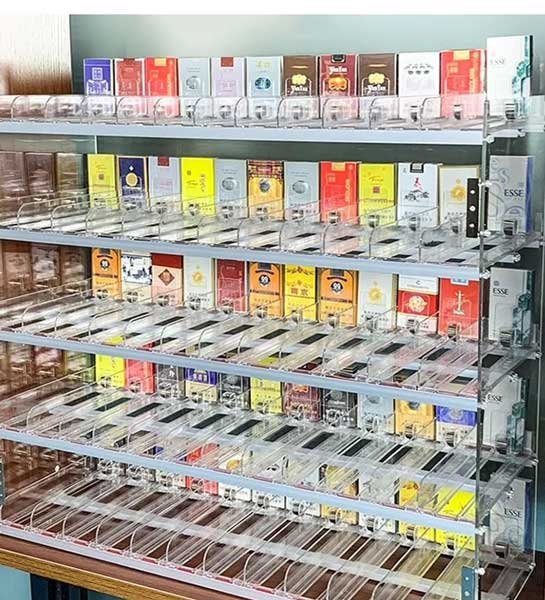
Photo used for indicative purpose only
Cigarette price increase after budget 2026 leads to over-MRP sales and market distortion
Shimla, Feb 23,
Nearly a month after the Union Budget reshaped tobacco taxation in India, a quiet but widespread market disruption is unfolding at the ground level, directly impacting consumers. Regular cigarette brands have either disappeared from retail shelves or are being sold at significantly inflated prices, often 30 to 35 percent above the printed Maximum Retail Price (MRP). A Rs 95 pack of Gold Flake is now being sold for Rs 120, while Rs 60 variants are being pushed at Rs 80. What is more striking is the openness with which this overpricing is being justified, with retailers claiming that distributors themselves are supplying stock at elevated rates, leaving them with no option but to pass on the burden.
After budget 2026- Cigarette price increase after budget 2026 leads to over-MRP sales and market distortion
The timing of this distortion aligns closely with the revised tobacco taxation regime introduced in the Budget, which increased GST on cigarettes to 40 percent while restructuring excise duties and cess. This has effectively pushed the total tax burden on cigarettes to well over half of the retail price, making tobacco one of the most heavily taxed consumer products in the country. While the intent behind such taxation is rooted in public health objectives and revenue generation, the immediate fallout appears to be a disruption in the supply chain, leading to inconsistent availability and opportunistic pricing across markets.
On the ground, the situation raises serious concerns about whether this is merely a transitional supply shock or a case of controlled scarcity within the distribution network. Retailers uniformly point towards distributors for the inflated rates, but the lack of transparency in the supply chain makes it difficult to verify these claims. The pattern, however, is consistent across regions, suggesting that the issue is not isolated. In the absence of strict enforcement mechanisms, such practices risk evolving into a form of informal cartelisation, where prices are dictated beyond regulatory oversight.
Also read: Himachal to auction liquor vends online in 2026-27; Excise overhaul targets revenue boost
Smokers: High contributors, weak protection- Cigarette price increase after budget 2026 leads to over-MRP sales and market distortion
This situation exposes a deeper paradox in the system. Tobacco consumers, despite contributing significantly to government revenues—estimated at over Rs 76,000 crore annually—remain among the least protected when it comes to market exploitation. Legal cigarettes alone account for a disproportionately high share of tobacco tax revenue, yet there is virtually no effective mechanism to prevent over-MRP sales or to address consumer grievances in real time. The regulatory framework exists on paper, but its enforcement in fragmented retail markets remains weak.
Policy push vs market fallout
The government’s taxation policy is designed to discourage consumption while maintaining a strong revenue stream, but such market distortions risk undermining both objectives. Sharp and unregulated price hikes at the retail level could potentially push consumers towards cheaper, unregulated, or even illicit alternatives, thereby defeating public health goals and causing revenue leakages. Experts have already flagged the possibility of increased smuggling and growth in the illegal cigarette trade following steep tax increases, a concern that gains credibility in light of the current supply inconsistencies.
At its core, the issue reflects a gap between policy and implementation. While taxation decisions are taken at the highest levels with clear intent, the downstream market remains largely unmonitored, allowing stakeholders within the supply chain to exploit grey areas. The result is a scenario where consumers are not only paying among the highest indirect taxes in the economy but are also being subjected to illegal premiums without any effective recourse.
The larger question that emerges is not about the justification of higher taxes, but about accountability within the market. If regulation ends at the point of taxation and does not extend to ensuring fair retail practices, it creates space for systemic exploitation. For now, the post-budget cigarette market stands as a clear example of this disconnect—where policy intent is firm, but enforcement on the ground remains conspicuously absent.
Disclaimer: This article does not promote or endorse smoking or the use of tobacco in any form. It is written purely from a consumer rights perspective to highlight market practices, pricing irregularities, and regulatory concerns affecting consumers. Smoking is injurious to health, and readers are strongly advised to avoid tobacco use.
About the Author


The HimachalScape Bureau comprises seasoned journalists from Himachal Pradesh with over 25 years of experience in leading media conglomerates such as The Times of India and United News of India. Known for their in-depth regional insights, the team brings credible, research-driven, and balanced reportage on Himachal’s socio-political and developmental landscape.