Himachal Pradesh High Court rejects Temple Workers’ Plea for Regularisation, Citing Lack of Employer–Employee Relationship

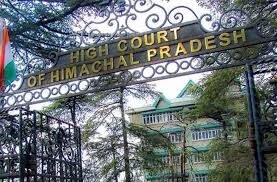
Photo used for indicative purpose only. Source internet
Shimla, Dec 2,
The Himachal Pradesh High Court has declined relief to a group of workers claiming long-term engagement at the Mata Chintpurni Temple in Una district, ruling that their services cannot be regularised in the absence of proof that they were ever formally employed by the Temple Trust.
A single-judge bench of Justice Sandeep Sharma dismissed the petition challenging the Commissioner-cum-Deputy Commissioner Una’s order dated July 4, 2022, through which the workers’ representation for regularisation had been rejected. The petitioners—who described themselves as Langar Sevadars, Mandir Sevadars, electricians and support staff—argued that having completed over eight years of service or more than 240 days annually on a daily-wage basis, they were entitled to parity with regular government employees.
The court, however, found the plea legally untenable. Justice Sharma observed that the petitioners had not produced any foundational documents that could establish a statutory or contractual relationship with the Mata Chintpurni Temple Trust. “No appointment orders, muster rolls, or evidence of payment of wages from Trust funds have been placed on record,” the bench noted, adding that documents such as identity cards, RTI extracts or internal instructions issued during Navratra were inadequate to prove formal engagement.
Rejecting the petitioners’ reliance on the Ashok Kumar & Others vs State of Himachal Pradesh ruling, the court clarified that such precedents apply only where individuals are appointed against sanctioned posts and receive wages from authorised sources. To claim regularisation, the bench underscored, the appointment must be lawful and satisfy constitutional requirements under Articles 14 and 16.
Justice Sharma reiterated the principles laid down in the Supreme Court’s landmark judgment in Secretary, State of Karnataka vs Uma Devi, which bars regularisation of individuals who enter service through informal, voluntary or backdoor means. The bench emphasised that gratuitous or devotional service at a religious institution cannot morph into a legally enforceable claim for public employment benefits.
Significantly, the court pointed out that a 2021 judgment involving similarly placed individuals at the same temple had already held that such workers were volunteers and not employees. As that decision had attained finality, the present petition seeking nearly identical relief was deemed not maintainable.
Holding that the petitioners had failed to demonstrate any legal basis for their claim, the court dismissed the petition and upheld the Commissioner’s decision, effectively endorsing the Temple Trust’s stand that no employer–employee relationship existed.
About the Author

The HimachalScape Bureau comprises seasoned journalists from Himachal Pradesh with over 25 years of experience in leading media conglomerates such as The Times of India and United News of India. Known for their in-depth regional insights, the team brings credible, research-driven, and balanced reportage on Himachal’s socio-political and developmental landscape.