Shimla, Nov 19,
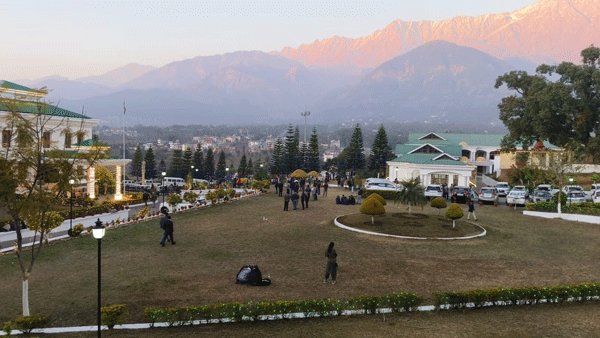
The stage is set for what may become one of the most intense legislative confrontations in recent years, as the Himachal Pradesh government braces for the longest winter session ever—scheduled from November 26 to December 5 at Tapovan, Dharamshala. Days before the session begins, over 600 questions have already poured into the Assembly Secretariat, signalling that the House is gearing up for a demanding, high-pressure 10-day run. With nearly every department expected to face scrutiny, officials expect the final tally to cross 700 queries once the submission window closes at 11:59 p.m. tonight.
This unprecedented avalanche of questions, all filed online, underscores both the heightened expectations on the government and the widened scope of legislative oversight following a year marked by natural disasters, financial strain, and uneven development across several sectors. Secretariat insiders say that rarely has the Assembly seen such volume ahead of a winter session—a clear indication that MLAs are preparing for a ferocious round of accountability.
A dominant share of the questions relates to last monsoon’s widespread destruction, which continues to cast a long shadow over governance. Queries on landslides, damaged infrastructure, compensation packages, disbursal timelines, road restoration, and departmental coordination have surged. Legislators from both hills and valleys appear intent on demanding clarity on why certain roads remain blocked, why some relief claims are still pending, and how the government plans to safeguard vulnerable zones before the next monsoon.
Alongside disaster-centric issues, the Secretariat has seen a sharp rise in questions on water supply interruptions, shortages in health services, power supply challenges, and persistent complaints regarding mining operations—particularly illegal mining hotspots. Departments dealing with irrigation, PWD, energy, health, and home affairs are expected to have a particularly heavy workload this session.
Politically, the session is shaping up to be anything but routine. The opposition, sensing an opportunity, is preparing to mount a multi-front offensive—targeting not only disaster management but also the state’s precarious financial health, delayed development projects, and the administration’s alleged lack of urgency in post-disaster rehabilitation. The government, on the other hand, is expected to enter the House armed with data, work reports, and expenditure records to demonstrate that relief and reconstruction have been pursued despite severe resource constraints.
Insiders say the Congress government aims to turn the narrative toward its achievements—particularly the funds sanctioned for restoration, new infrastructure approvals, and welfare schemes rolled out in difficult circumstances. But with over 600 questions already demanding answers, the government faces the immediate, practical challenge of preparing responses across sectors within a tight timeline—a task described by an official as “a test of both speed and transparency.”
As the winter session approaches, political watchers predict a combustible atmosphere. The combination of an unusually extended calendar, an unusually high volume of questions, and the lingering public anger over delayed reconstruction efforts ensures that the Tapovan House will not be short on drama. For legislators, this session offers a rare, elongated platform to raise constituency issues. For the government, it poses a trial of endurance, accountability, and narrative control.
Whether the session becomes a turning point or another political battlefield remains to be seen. But one thing is clear: Himachal’s longest winter session is already proving to be one of its most demanding even before the first gavel falls.
About the Author

The HimachalScape Bureau comprises seasoned journalists from Himachal Pradesh with over 25 years of experience in leading media conglomerates such as The Times of India and United News of India. Known for their in-depth regional insights, the team brings credible, research-driven, and balanced reportage on Himachal’s socio-political and developmental landscape.