IGMC AIIMS Chamiana Shimla: Lives at risk, warn Citizens group
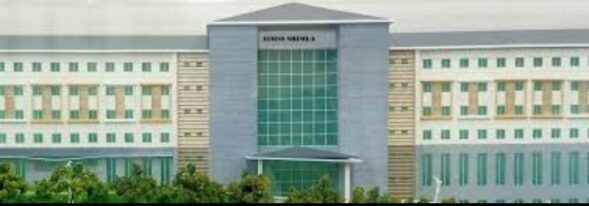
IGMC AIIMS Chamiana Shimla: Lives at risk, warn Citizens group
Shimla, April 9,
It is the kind of moment families dread—a patient clutches his chest in the middle of the night in Shimla, the diagnosis is clear, a cardiac emergency. But instead of a seamless rush into a fully equipped, integrated system, precious time is lost navigating where the critical intervention lies—between Indira Gandhi Medical College (IGMC) and AIIMS Chamiana. In the hills, where roads wind as much as decisions do, even a short delay can become irreversible.
It is this lived risk—not theoretical concern—that the Simla Collective has now brought into sharp focus, warning that the ongoing fragmentation of healthcare services in the state capital could have life-threatening consequences. At a meeting held on April 6, the Collective termed the shifting of key departments such as cardiology and cardiothoracic surgery from IGMC to AIIMS Chamiana as a “dangerous disruption” of Himachal Pradesh’s tertiary healthcare framework.
The group argues that emergencies, particularly cardiac cases, demand immediate, coordinated, multi-disciplinary intervention, something that stood stronger when services functioned within an integrated system at IGMC. By splitting critical departments across two distant locations, that chain of response has been weakened, it said. Senior member Uma Singh Mahajan underscored that preventable deaths during patient transfers cannot be brushed aside as fate, asserting that such incidents are consequences of systemic decisions rather than isolated misfortunes.
Also read:Patients caught in crossfire of poor planning between IGMC and AIMSS Chamiana
Shimla’s terrain itself compounds the crisis. Narrow roads, steep gradients, frequent traffic congestion and unpredictable weather often turn even short distances into prolonged journeys, making inter-facility transfers fraught with risk. The Collective noted that elderly patients and those with co-morbidities are particularly vulnerable, as delays in response time, gaps in risk assessment and the absence of seamless emergency protocols increase the likelihood of adverse outcomes.
Concerns have also been raised about the preparedness of AIIMS Chamiana to function as a standalone critical care hub at this stage. The group pointed to the absence of a functional blood bank, lack of reliable public and medical transport connectivity, and unsafe access routes affected by ongoing highway construction, arguing that such infrastructural gaps further strain the system during emergencies.
Describing IGMC as the backbone of Himachal Pradesh’s public healthcare network, the Collective cautioned that dismantling its integrated structure could have far-reaching implications not only for emergency response but also for medical education and disaster preparedness in the state. Equally troubling, it added, is the apparent lack of transparent planning behind the transition, alleging that no public clinical risk assessments, geriatric impact studies or patient consultations were undertaken before the shift, which appears driven more by construction priorities than medical necessity.
Calling for urgent course correction, the Simla Collective has demanded reintegration of critical services and a shift towards evidence-based, patient-centric planning, warning that in a city where geography already tests survival, policy decisions must not become an added barrier between a patient and timely care.
About the Author

The HimachalScape Bureau comprises seasoned journalists from Himachal Pradesh with over 25 years of experience in leading media conglomerates such as The Times of India and United News of India. Known for their in-depth regional insights, the team brings credible, research-driven, and balanced reportage on Himachal’s socio-political and developmental landscape.