IGMC altercation: Political noise grows louder, real hospital challenges still ignored?
https://himachalscape.com/
Shimla, Dec 26,
The altercation between a patient and a Senior Resident doctor in IGMC Shimla has rapidly transformed from a medical disagreement into one of the most widely discussed healthcare-related issues in the state. What started as a dispute inside the Bronchoscopy Unit has evolved into a state-wide point of concern, with multiple political and professional groups reacting strongly, even as the deeper causes behind such confrontations remain largely unaddressed. The state government acted quickly by discontinuing the services of the doctor involved, stating that the action was taken in view of the seriousness of the situation. Meanwhile, several medical professionals and legal observers have expressed the view that any action must follow established procedures and allow all sides to be heard before finalising conclusions.
Within the opposition(BJP), differences of opinion have emerged on how the matter should have been handled. While one MLA emphasised the importance of ensuring that the patient’s concerns are addressed, another highlighted the need to safeguard the rights of medical professionals who work under demanding circumstances. This divergence reflects a larger point: responses to the incident are influenced by varied perspectives and priorities, and the situation has quickly become part of a broader political conversation.
Resident Doctors’ Associations in Himachal Pradesh and outside have expressed concern that punitive measures taken without complete inquiry may affect the morale of doctors already dealing with a heavy workload. They argue that resident doctors often shoulder long duty hours due to shortage of staff, particularly in departments dealing with emergency and specialised procedures. Such extended shifts can lead to fatigue and high stress, which, when combined with the emotional anxiety of patients and their attendants, may create situations where communication gaps or friction can escalate. Medical bodies have appealed for support systems that protect both patient care and the working environment of healthcare professionals.
At the same time, the CPI(M) has noted that decisions in such matters should align with service rules and due process. It has emphasised the need to avoid escalation, and to ensure that the situation is handled in a manner that maintains normal hospital functioning while ensuring a fair enquiry.
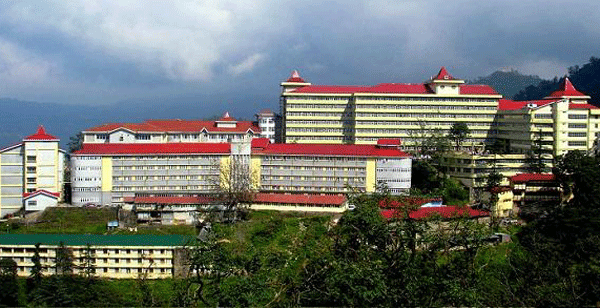
The larger issue, which risks being overshadowed, is that confrontations in hospitals are no longer isolated incidents. Increasing patient rush, limited specialist availability in peripheral health facilities, shortage of doctors and nurses, long waiting times, and absence of trained security staff have collectively created a challenging environment. IGMC, as the state’s premier referral hospital, carries a disproportionate patient load, adding pressure on its emergency and critical care units. When expectations are high and resources are stretched, even minor misunderstandings may turn into serious disputes.
The IGMC incident is therefore not only about one doctor or one patient—it highlights the urgent need to strengthen healthcare systems so that such situations can be prevented. Addressing workforce shortages, improving infrastructure in district hospitals, ensuring effective communication within hospital settings, and reinforcing security and grievance redressal mechanisms can significantly reduce the likelihood of conflict. Going forward, the priority for all stakeholders must be to ensure that hospitals remain places of healing, where both patients and medical professionals feel safe, respected and supported. The real challenge lies not in debating who is right or wrong in this single episode, but in collectively improving the system to prevent such incidents from recurring.
About the Author

The HimachalScape Bureau comprises seasoned journalists from Himachal Pradesh with over 25 years of experience in leading media conglomerates such as The Times of India and United News of India. Known for their in-depth regional insights, the team brings credible, research-driven, and balanced reportage on Himachal’s socio-political and developmental landscape.