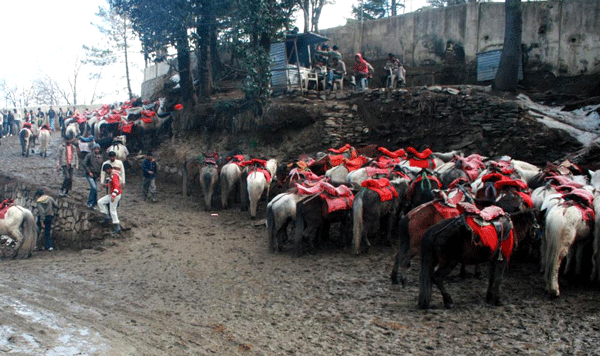
Old photo. Used for indicative purpose only. Source: Internet
The National Green Tribunal (NGT) has issued a landmark order capping the maximum daily tourist capacity at 2,232 persons and limiting horse and pony operations to 293 per day at the ecologically sensitive Kufri–Mahasu Peak near Shimla. The Tribunal has also directed the Himachal Pradesh Government to frame and notify eco-regulation guidelines within three months to ensure sustainable tourism and environmental protection in the area.
The order was passed on October 14, 2025, by the NGT’s Principal Bench, New Delhi, in Shailendra Kumar Yadav v. State of Himachal Pradesh & Others and was uploaded on October 27, 2025. The Bench, comprising Justice Prakash Shrivastava (Chairperson) and Dr. A. Senthil Vel (Expert Member), accepted a comprehensive report submitted by the Divisional Forest Officer, Theog, which scientifically determined these caps using Cifuentes’ ecological carrying capacity methodology. The study took into account parameters such as slope, trail conditions, vegetation health, and sanitation limits to assess the area’s capacity.
https://himachalscape.com/ngt-panel-excessive-horses-and-ponies-damaging-kufris-green-forest/The case originated from a letter petition filed by Shailendra Kumar Yadav, who had drawn attention to the fact that nearly 700–800 horses operate daily across 8–10 square kilometres of the Kufri Reserved Forest and catchment area. The petitioner alleged that unregulated horse movement and excessive tourist activity had caused severe damage to tree roots, trails, and local vegetation, apart from encouraging illegal parking and encroachments into forest land. He also linked the deforestation and ecological imbalance in the region to the declining snowfall and drying up of Shimla’s traditional water sources.
The matter was examined by the Tribunal over two years through several stages of inquiry and review. In March 2023, a Joint Committee was formed to assess environmental degradation in the area. The Committee’s second report, submitted in December 2023, confirmed large-scale damage to vegetation, spread of invasive plant species, and faecal coliform contamination in local water sources. Subsequently, on April 22, 2025, the NGT directed the State to prepare an action plan focusing on eco-friendly horse dung management, tourist regulation, and a scientific carrying capacity study.
The final report submitted in July 2025 estimated that about 400–500 tonnes of horse dung are generated annually at Kufri–Mahasu Peak. It proposed a two-stage treatment system — manuring and vermi-composting — at an estimated cost of Rs 79,000 per year (Rs 16 per kilogram). The report also examined the feasibility of a briquetting system but found it to be less sustainable and economically viable.
https://himachalscape.com/himachal-forest-officials-summoned-by-ngt-for-neglect-in-kufri-environmental-case/Accepting the recommendations, the Tribunal directed the Himachal Pradesh Government to prepare and notify eco-regulation guidelines in consultation with horse-owner associations and to submit an Action Taken Report to the NGT Registrar General within three months. The guidelines are expected to lay down rules for managing visitor numbers, horse operations, waste disposal, and infrastructure development in the sensitive Kufri–Mahasu ecosystem.
Here it is pertinent to mention that Kufri wildlife area i a part of Shimla water catchment sanctuary. It is also a watershed catchment area of two India river systems i.e Yamuna and Satluj.
This order marks the first instance where a scientifically determined tourist and animal carrying capacity limit has been mandated for a Himachal Pradesh tourist destination. The ruling is being seen as a precedent-setting move that could transform Kufri–Mahasu Peak into a model of sustainable mountain tourism, balancing livelihood opportunities with ecological conservation.
About the Author

The HimachalScape Bureau comprises seasoned journalists from Himachal Pradesh with over 25 years of experience in leading media conglomerates such as The Times of India and United News of India. Known for their in-depth regional insights, the team brings credible, research-driven, and balanced reportage on Himachal’s socio-political and developmental landscape.