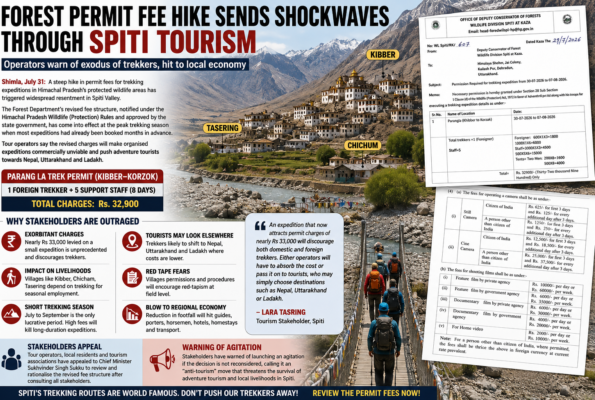
Permit fee hike sends shockwaves through Spiti tourism, operators warn of exodus of trekkers
Shimla, July 31
A steep hike in permit fees for trekking expeditions in Himachal Pradesh’s protected wildlife areas has triggered widespread resentment in Spiti Valley, with tourism stakeholders warning that the decision could severely damage the state’s adventure tourism sector, drive trekkers to neighbouring Himalayan destinations and jeopardise the livelihoods of hundreds of self-employed youth in the tribal region.
The Forest Department’s revised fee structure, notified under the Himachal Pradesh Wildlife (Protection) Rules and approved by the state government, has come into effect at the peak of the trekking season when most expeditions had already been booked months in advance.
The notification, signed by Adl. Chief Secretary (Forest) Kamlesh Kumar Pant, prescribes revised charges for trekkers, support staff, camping, vehicles and photography in protected wildlife areas.
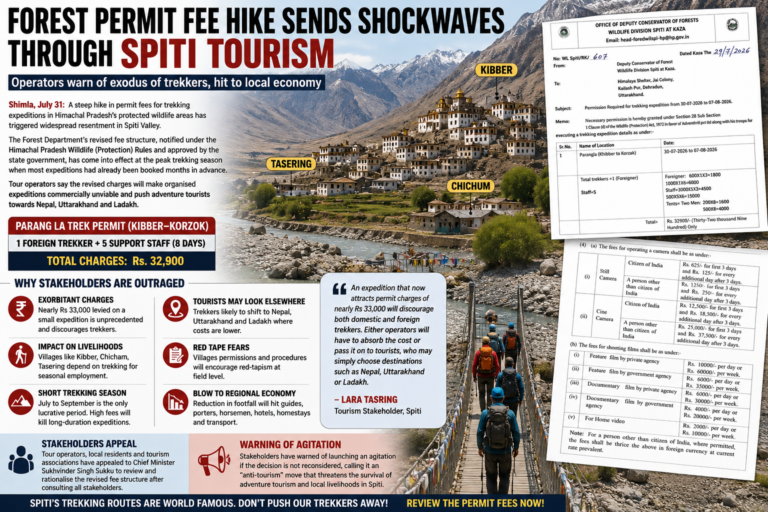
The impact of the revised charges is evident from a permit issued by the Deputy Conservator of Forests, Wildlife Division, Spiti at Kaza, for the internationally known Parang La trek connecting Kibber in Spiti with Korzok in Ladakh. The permit shows that an expedition comprising one foreign trekker and five support staff has been charged Rs 32,900 for an eight-day trek from July 30 to August 7.
The charges include separate fees for the trekker, local staff, camping tents and other components prescribed under the revised rules.
Tour operators described the charges as unprecedented, saying the additional financial burden would make organised expeditions commercially unviable. They argued that adventure tourists, particularly foreign trekkers, would increasingly prefer Nepal, Uttarakhand and Ladakh, where trekking costs remain comparatively lower.
Lara Tasring, a tourism stakeholder from Spiti, said charging nearly Rs 33,000 merely for government permits on a small expedition would discourage trekking groups from choosing Himachal Pradesh.
“This decision strikes at the heart of Spiti’s adventure tourism economy. Tour operators cannot absorb such high government charges and tourists are unlikely to pay substantially higher prices when similar Himalayan treks are available elsewhere. Many expeditions may be cancelled before they even begin,” Tasring said.
He said the decision comes at a time when trekking tourism is already struggling due to unpredictable weather patterns, shrinking trekking windows and the impact of climate change on high-altitude routes.
Stakeholders fear the revised fee structure could gradually eliminate long-duration expeditions such as the Parang La trek, reducing tourism to short day visits that generate little income for local communities. Villages including Kibber, Chicham and Tashigang depend heavily on trekking expeditions for seasonal employment as guides, cooks, porters, horsemen, transport operators and suppliers of logistics.
Operators also expressed concern that the new permit regime would increase bureaucratic procedures in the field. They alleged that the system could encourage red tape in the issuance of permits while adding uncertainty and delays for organisers who already operate within a short trekking season extending from July to September.
Tourism stakeholders questioned the timing of the decision, pointing out that the tribal areas of Himachal remain open for trekking and mountaineering until November and that the state has been actively promoting eco-tourism and sustainable adventure tourism. They argued that imposing substantial new costs at this stage sends a contradictory message to domestic and international visitors.
According to the revised notification, the revenue collected from protected areas is intended to support wildlife conservation, including snow leopard conservation initiatives. However, stakeholders maintain that conservation objectives should not come at the cost of crippling an industry that provides employment in some of the state’s most remote and economically fragile regions.
Also read Churdhar Sanctuary: Locals exempted as new entry fee aims to balance tourism and conservation
The issue has also revived concerns over increasing regulatory hurdles for adventure tourism, with operators referring to similar complaints regarding permissions for trekking in the Churdhar Wildlife Sanctuary.
Appealing for immediate intervention, tour operators and local stakeholders have urged Chief Minister Sukhvinder Singh Sukhu to review and rationalise the revised fee structure after consulting tourism associations, local panchayats and residents of tribal areas. They warned that if the notification is not reconsidered, they would launch an agitation against what they termed an anti-tourism decision, saying it risks pushing adventure tourism away from Himachal Pradesh at a time when the state can ill afford to lose visitors and employment opportunities.
About the Author

The HimachalScape Bureau comprises seasoned journalists from Himachal Pradesh with over 25 years of experience in leading media conglomerates such as The Times of India and United News of India. Known for their in-depth regional insights, the team brings credible, research-driven, and balanced reportage on Himachal’s socio-political and developmental landscape.