Shimla relaxes traffic restrictions for advocates amid debate over access, exemptions & pedestrian rights


Shimla relaxes traffic restrictions for advocates amid debate over access, exemptions & pedestrian rights
Shimla, June 4
The Shimla district administration has temporarily eased traffic restrictions for advocates by allowing them to use the Shilli Chowk route connecting Chhota Shimla with the Himachal Pradesh High Court, pending a permanent resolution to the ongoing dispute over access to restricted roads in the state capital.
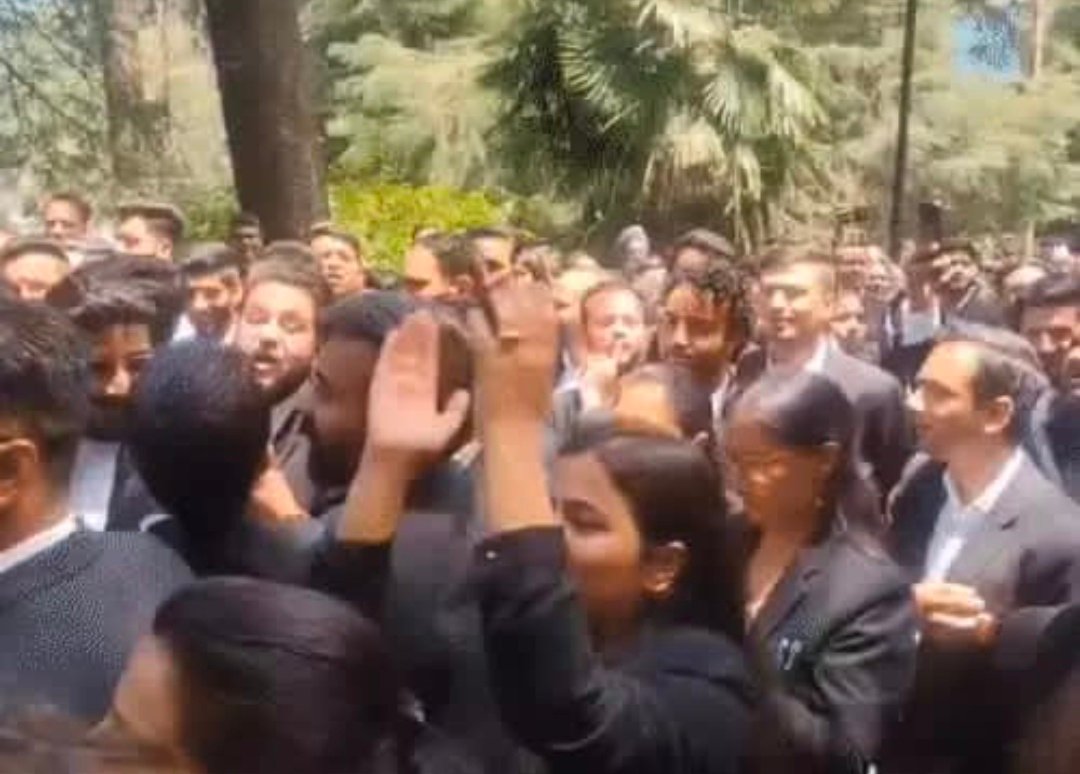
The decision follows a day long of friction between the administration and members of the legal fraternity after police issued challans to a number of advocates for allegedly using restricted roads without valid permits. To address the matter, a joint committee comprising representatives of the High Court, the District Bar Association, and the district administration has been constituted to develop a long-term solution.
The issue gained prominence after advocates objected to the closure of Shilli Chowk, an important route that had remained partially accessible during the construction of an underground utility duct. Following the completion of the work, the road was closed again, with access limited to permit holders.
Advocate General Anup Rattan is reported to have facilitated discussions between the administration and protesting advocates. Members of the legal community maintain that their residences, chambers, and courts are located within restricted zones, and that regular appearances before the High Court, District Courts, the Finance Commissioner, and revenue courts make access through Shilli Chowk essential.
They further contend that congestion on alternative routes frequently results in delays affecting court proceedings.
The matter expanded in scope when police reportedly issued challans to several advocate, government officials, including the SDM (Urban), for entering restricted areas without valid permits.
Under the traffic regulations governing Shimla’s pedestrian and restricted zones, unauthorized entry into sealed areas is subject to penalties.
The controversy has also reignited broader concerns regarding the perceived prevalence of VVIP privileges in Shimla. Critics argue that ministers, legislators, senior bureaucrats, and official convoys often enjoy access to roads that remain closed to the general public.
Senior advocate Sunil Chauhan supported the advocates’ demand for practical access, while citizen groups stressed the importance of consistent and impartial enforcement of traffic regulations.
Senior citizen Govind Chitkara and civic activist Suresh Kumar questioned the increasing number of exemptions granted within pedestrian zones. Former Deputy Mayor Tekinder Panwar reiterated his long-standing call for transforming Shimla into a genuinely vehicle-free hill town, expressing concern over the growing movement of vehicles on the Mall Road and Ridge, including official convoys, construction vehicles, film production units, and commercial traffic.
Observers note that the dispute has moved beyond the immediate concerns of the legal fraternity and now reflects a wider public discussion on equality before the law, urban mobility, pedestrian rights, and the future character of the historic hill capital.
While authorities maintain that traffic regulations are necessary to manage congestion and protect heritage spaces, residents argue that exemptions should be transparent, limited in scope, and applied uniformly across all sections of society.
The ongoing debate over traffic restrictions and exemptions in Shimla has taken this turn, with residents and civic activists alleging that vehicles belonging to MLAs are routinely parked on sealed roads near Willow Bank while strict enforcement continues at Shilli Chowk.
As consultations continue, the administration faces the complex task of balancing accessibility, the efficient functioning of the judiciary, heritage conservation, and public convenience in one of India’s most geographically constrained hill towns.
About the Author