Six die as Monsoon batters HP in first 24 hrs. tribal districts face unusual rainfall, widespread disruptions
Six die as Monsoon batters HP in first 24 hrs. tribal districts face unusual rainfall, widespread disruptions
Shimla, July 1,
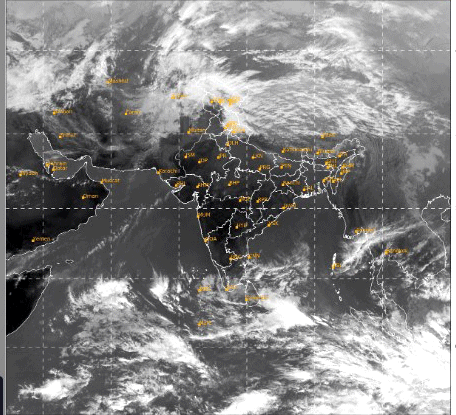
The southwest monsoon made a forceful entry into Himachal Pradesh, claiming six lives within the first 24 hours and triggering flash floods, landslides, falling boulders and road cave-ins across the state. The rains have caused extensive disruption to transport and power supply, while raising fresh concerns over the impact of heavy rainfall in the ecologically fragile tribal districts of Kinnaur and Lahaul-Spiti.
According to the State Emergency Operation Centre (SEOC), six people lost their lives in monsoon-related incidents. The fatalities include a woman killed after being hit by a falling boulder in Mandi, one person who died due to electrocution, two persons killed in separate road accidents, while the remaining deaths occurred in other rain-related incidents. Ten persons have also been injured. The cumulative monetary loss during the first day of the monsoon has been estimated at over ₹44.40 lakh.
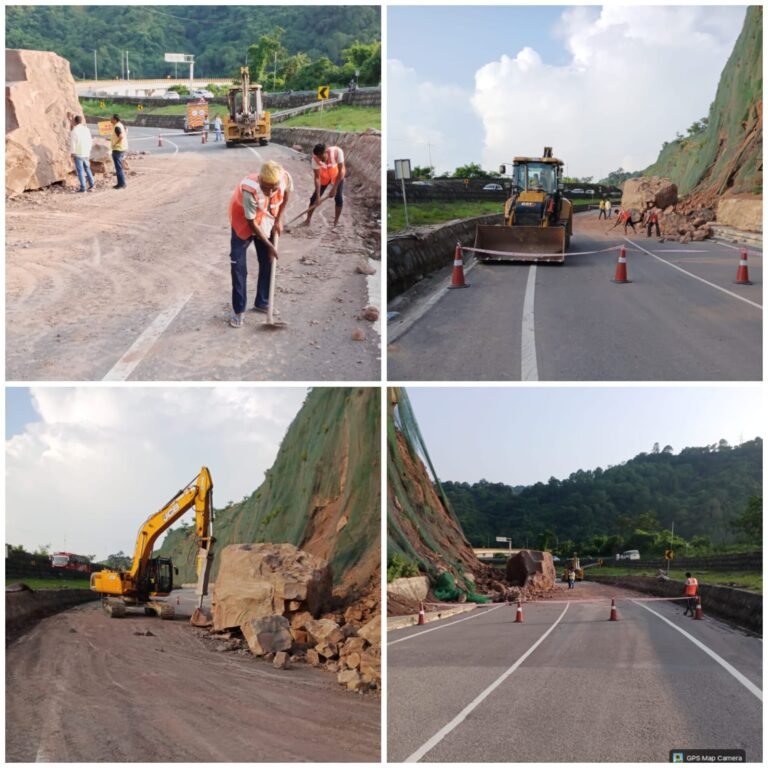
Heavy rain triggered flash floods in several seasonal streams, landslides blocked roads, and large boulders rolled onto highways in many parts of the state. In Shimla, dumping of debris from an under-construction site reportedly disrupted traffic on the Shimla-Chakkar road, exposing the growing risk posed by unchecked hill cutting during the rainy season.
The monsoon has also reached Kinnaur and Lahaul-Spiti, districts that traditionally receive relatively low monsoon rainfall because they lie in the rain shadow of the Himalayas.
This year’s early and active monsoon in these high-altitude tribal areas has become a matter of concern for geologists and disaster management authorities.
After a summer marked by rapid melting of glaciers and seasonal snow, heavy rainfall over unstable mountain slopes could trigger more landslides, debris flows and flash floods.
The combination of snowmelt and intense rainfall is also expected to increase the silt load in rivers, posing a challenge for hydroelectric projects and major dams across the Satluj, Beas and Chenab basins.
Officials are already monitoring sudden increases in water discharge in rivers feeding major hydropower stations, including the Larji project, where fluctuating water levels and high silt content may affect electricity generation and force temporary operational adjustments.
The public utility network has also suffered extensive disruption. By Wednesday evening, 35 roads remained blocked across the state, while 127 electricity distribution transformers (DTRs) were out of service, affecting power supply in several districts. No major drinking water supply scheme had been disrupted till the evening report.
The worst road disruption was reported from Kullu district, where 18 roads remained blocked, followed by Mandi with 11 roads. Two roads each were blocked in Lahaul-Spiti, Sirmaur and Una. In Lahaul-Spiti, the alternate road between Phura and Jahalma Nullah was closed, while in Una, rain damage led to the closure of the Ajouli-Sanoli road near the Punjab border and the Bhaderkali-Jailo Di Badh link road.
Power infrastructure suffered the maximum damage in Kullu, where 86 transformers were disrupted due to broken high-tension conductors and cable faults. Chamba reported 12 affected transformers, Solan 12, Mandi 11, Una five and one transformer remained out of service in Lahaul-Spiti.
The India Meteorological Department has forecast continued widespread rainfall over Himachal Pradesh during the coming days, with the possibility of heavy to very heavy showers at isolated places.
Authorities have advised people to avoid unnecessary travel in vulnerable hill areas and remain alert for flash floods, landslides and sudden rises in river and stream levels, particularly in the tribal districts where the terrain is highly fragile.
About the Author

The HimachalScape Bureau comprises seasoned journalists from Himachal Pradesh with over 25 years of experience in leading media conglomerates such as The Times of India and United News of India. Known for their in-depth regional insights, the team brings credible, research-driven, and balanced reportage on Himachal’s socio-political and developmental landscape.