The disaster is not just the rain?
A new government-backed resilience report argues that the devastation of 2023 and 2025 was shaped as much by human choices as by extreme weather
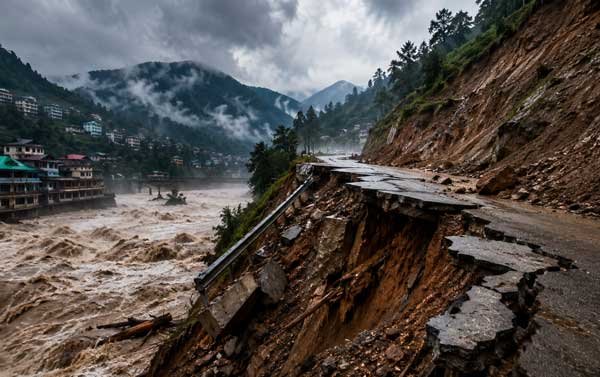
The disaster is not just the rain?
Shimla, July 22,
For decades, every major tragedy in Himachal Pradesh has largely been viewed through the lens of a natural disaster. Torrential rain, cloudbursts, flash floods and landslides were treated as unavoidable acts of nature, leaving governments to focus on relief, compensation and reconstruction. But the State’s own report, Towards a Resilient Himachal Pradesh: Lessons and Recommendations from the 2023 and 2025 Hydro-meteorological Disasters, invites a broader understanding of these events.
Its conclusion is both uncomfortable and transformative.
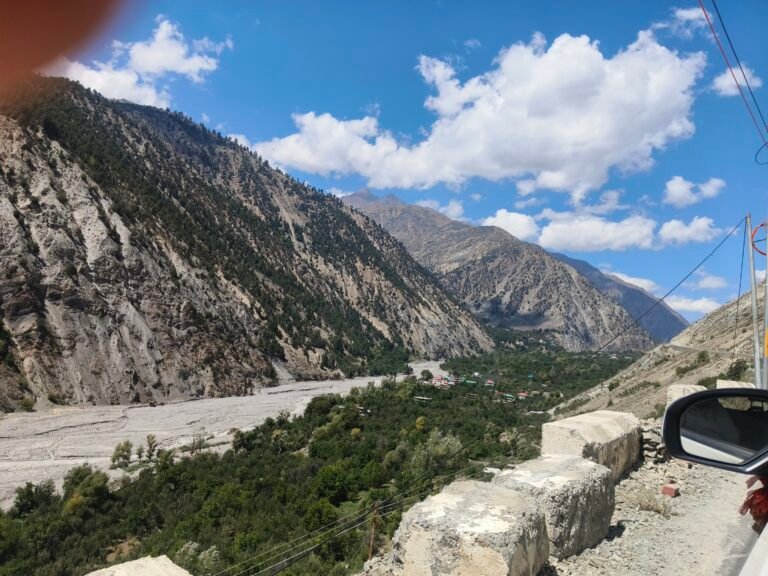
The devastating disasters of 2023 and 2025, it argues, were “not isolated natural events” but the result of climatic variability interacting with ecological degradation, unplanned urbanisation, indiscriminate slope cutting, unregulated infrastructure development and mounting tourism pressures.
That single observation changes the entire debate.
If disasters are produced not only by extreme rainfall but also by human decisions, then resilience cannot be built merely by deploying more relief camps or rebuilding washed-away roads. It must begin much earlier—inside planning offices, engineering departments, municipal bodies and environmental regulators.
Throughout the 139 pages of the report, the same message appears repeatedly: Himachal’s development model has not kept pace with the realities of a fragile Himalayan ecosystem. The document identifies critical weaknesses in infrastructure planning, slope stabilisation, drainage management, land-use regulation and enforcement of environmental laws, while recommending a decisive shift towards risk-informed and climate-resilient development.
The report does not argue against development.
Instead, it argues against development that ignores geology.
One of its strongest recommendations is that infrastructure in mountain regions must follow mountain-specific standards rather than conventional engineering practices. Before roads, bridges, buildings or hydropower projects are approved, mandatory topographical assessments, hazard micro-zonation and geological investigations should determine whether the terrain can safely support such construction. Post-construction audits and third-party assessments are also recommended to ensure that projects remain resilient long after inauguration ceremonies conclude.
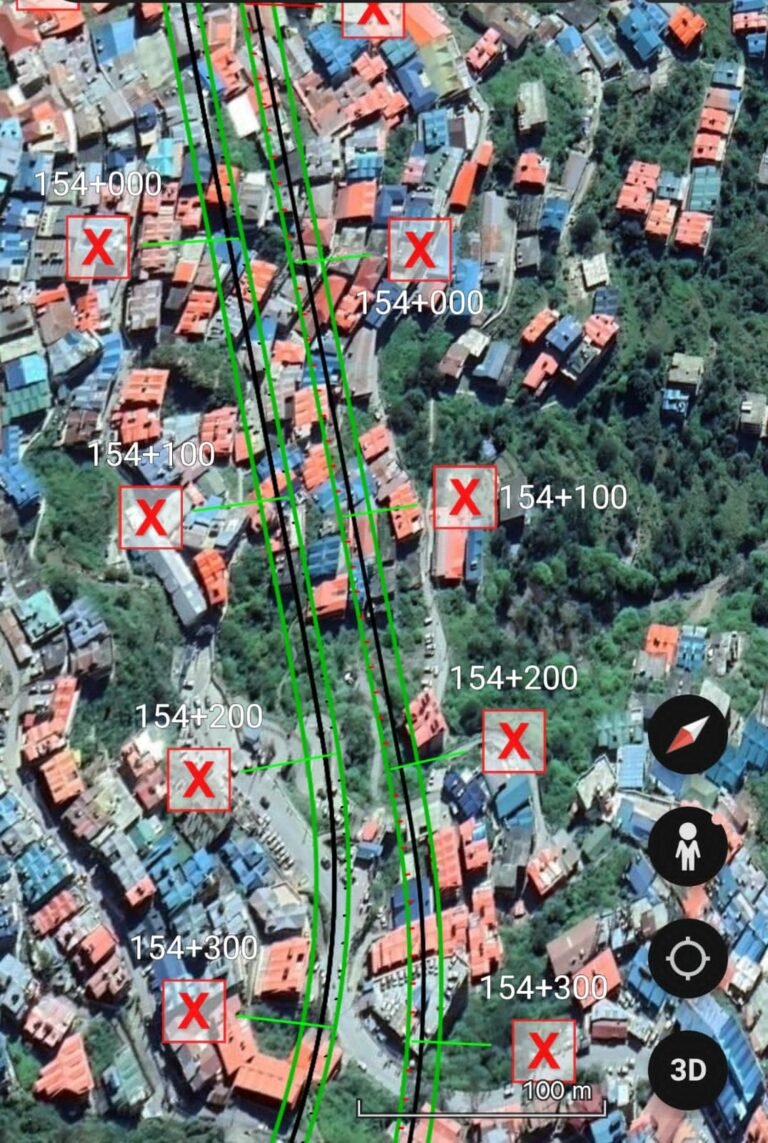
This is particularly relevant because the report specifically refers to the extensive damage witnessed on recently completed highway projects after the 2023 monsoon, arguing that site selection and construction practices deserve far greater scientific scrutiny.
The report identifies several governance challenges, including weaknesses in land-use regulation, environmental compliance, drainage planning and enforcement mechanisms.
It highlights encroachments on drainage channels, indiscriminate slope cutting, debris dumping, weak enforcement of Town and Country Planning norms and inadequate environmental compliance as recurring contributors to disaster risk. Rather than treating these as isolated violations, the report recommends regular environmental audits, stronger accountability mechanisms and strict enforcement of zoning regulations and buffer zones.
Perhaps the report’s most important contribution is that it reframes disaster management itself.
For years, disaster management has largely been measured by the efficiency of response—how quickly roads reopen, electricity is restored or compensation reaches affected families. The report argues that this approach is no longer sufficient. It explicitly calls for the State to move “from reactive disaster response to proactive, risk-informed development,” integrating disaster risk reduction and climate adaptation into every level of governance and planning.
That shift has profound implications.
It means that disaster management cannot remain the responsibility of the Revenue Department alone. Public Works, Urban Development, Tourism, Town and Country Planning, Forests, Rural Development, local bodies and even private developers become equal stakeholders in reducing disaster risk.
The report also reminds policymakers that local communities are often the first responders, possessing invaluable knowledge of terrain, seasonal watercourses and vulnerable slopes. It recommends community-based disaster risk reduction, trained village response teams, regular mock drills and stronger local preparedness rather than relying solely on institutional response after disasters strike.
Also read: Himachal Human Development report 2025 warns of escalating Climate Crisis
Technology, too, is presented as a planning tool rather than merely an emergency tool. GIS-based hazard mapping, remote sensing, satellite monitoring, real-time weather forecasting and digital decision-support systems are recommended to guide where development should—or should not—take place.
Perhaps the report’s most sobering conclusion is that resilience cannot be achieved through post-disaster reconstruction alone. It requires a transformation in governance, planning, infrastructure development, tourism management, environmental regulation and community participation. It ultimately advocates an “Ideal Development Model” for the Himalayas—one based on ecological sensitivity, carrying-capacity planning and long-term sustainability rather than short-term economic gains.
That is the real lesson from 2023 and 2025.
Rainfall may trigger disasters. But whether those disasters become catastrophes depends increasingly on choices made long before the clouds gather.
Himachal now possesses something more valuable than another post-disaster assessment. It possesses an evidence-based blueprint prepared by its own experts, administrators, engineers and scientists. The challenge is no longer identifying what must change.
It is finding the political and administrative resolve to ensure that the next development project does not become the next disaster site.
About the Author

The HimachalScape Bureau comprises seasoned journalists from Himachal Pradesh with over 25 years of experience in leading media conglomerates such as The Times of India and United News of India. Known for their in-depth regional insights, the team brings credible, research-driven, and balanced reportage on Himachal’s socio-political and developmental landscape.