NHAI rebuts negligence charge as recurring subsidence puts Bhattakufar-Dhalli tunnel project under scrutiny
Shimla, Sep 20
National Highways Authority of India (NHAI) has rejected allegations of negligence in the construction of the twin-tube tunnel on the Bhattakufar-Dhalli stretch, saying that all necessary precautions were being taken in accordance with established engineering practices and that remedial measures had been undertaken wherever damage was reported.
The clarification comes amid recurring incidents of land subsidence and structural damage in the vicinity of the under-construction tunnel, raising fresh questions over the geological stability of the terrain and the safety of construction beneath densely populated areas of Shimla.
In its rebuttal to reports circulating in the media and social media regarding cracks in buildings in Sanjauli and their alleged connection with tunnel construction, an NHAI spokesperson said, “All necessary precautions have been undertaken during project execution in accordance with established engineering practices and in consultation with the concerned residents.”
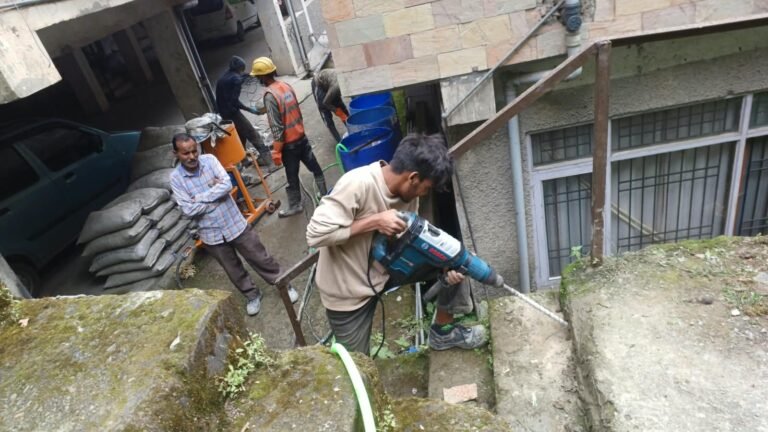
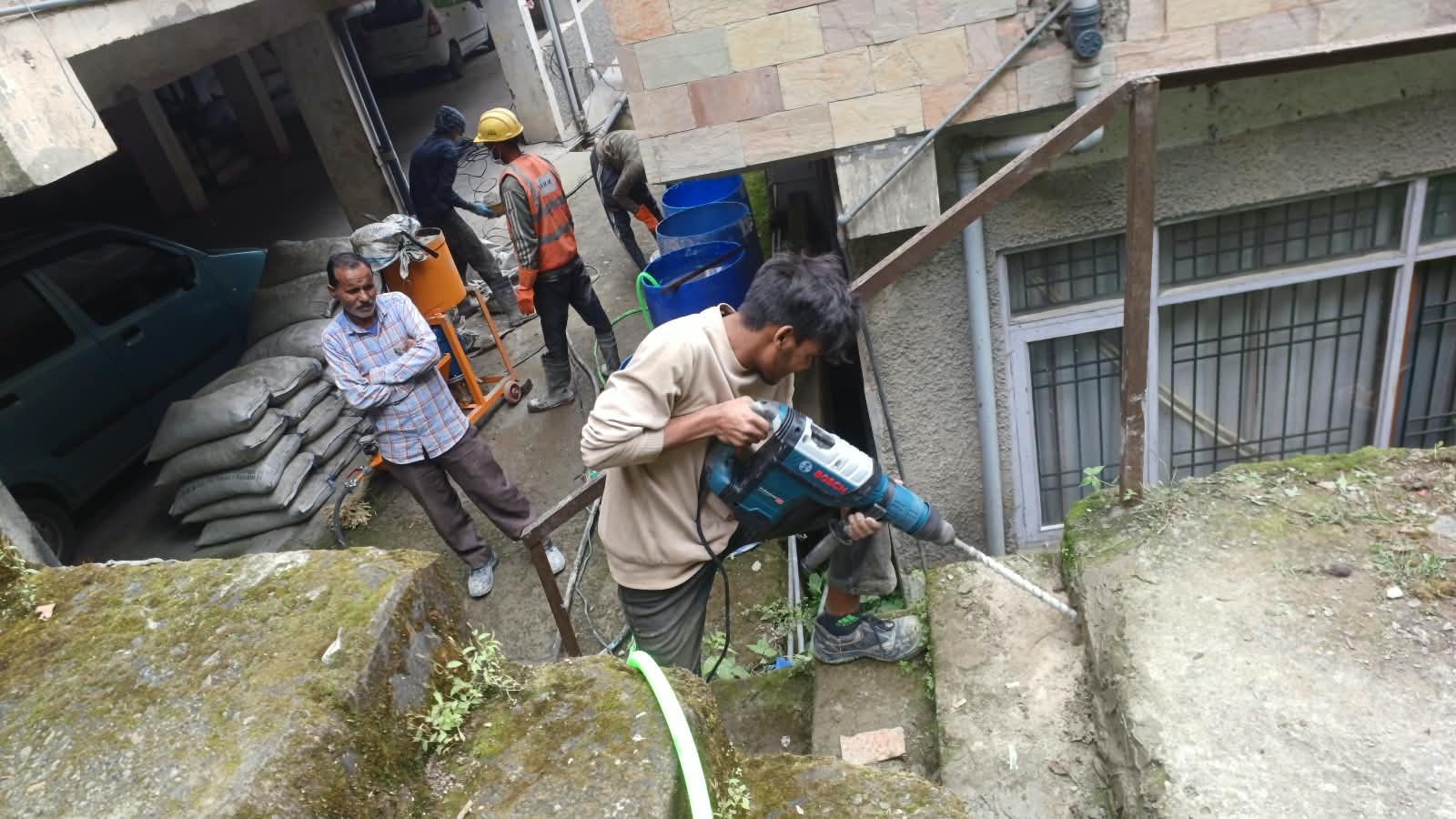
NHAI said it had proactively undertaken rectification and remedial measures at affected locations. These included “grouting, structural retrofitting, crack sealing and repair, restoration of brickwork, and other engineering interventions as deemed necessary based on site-specific assessments and technical requirements.”
The authority also clarified that “blasting activities associated with the tunnel construction were suspended in November 2025 and no blasting operations have been undertaken thereafter.” It said the project area was being continuously monitored and appropriate measures were being taken wherever required.
The rebuttal comes after the November 22 Bhattakufar incident, when a large cavity suddenly developed in the middle of the Mehli-Dhalli road. The front wheel of an HRTC bus carrying schoolchildren sank into the depression and a student fell into the cavity, narrowly averting a major tragedy. The incident triggered widespread alarm among residents, who subsequently reported cracks in several nearby houses and other structures.
Also Read
Five storey building collapse in Shimla- No loss of life
The district administration immediately ordered suspension of tunnelling, excavation and blasting activities and sought a detailed technical assessment. A preliminary inspection by the Geological Wing reportedly recorded a major cavity, cracks in the rock mass, continuous seepage, exposed utilities and structural cracks in nearby houses. Importantly, the inspection noted that the under-construction twin-tube tunnel passed beneath the affected zone and that the influence of underground excavation could not be ruled out at that stage.
The Geological Survey of India (GSI) was subsequently called in to examine the site. The GSI team inspected Bhattakufar and also visited the Mehli and Chaunti tunnel stretches. The inspection assumed importance because the administration sought to establish whether the subsidence was attributable to tunnel excavation, existing geological conditions, underground utilities or a combination of factors.
Observations from the GSI inspection reportedly indicated the possibility of an old deodar tree trunk beneath the affected area and leakage from underground pipelines having weakened an already vulnerable zone. Such observations point towards the complex nature of the subsurface conditions and the need for a clear technical assessment of the interaction between the existing strata, underground water movement and tunnel excavation.
An Archaeological Survey of India (ASI) team also inspected the Bhattakufar site, adding to the series of technical inspections following the subsidence. The successive inspections by the district administration, Geological Wing, GSI and ASI have brought renewed focus on the stability of the terrain and the implications of underground construction in an already developed urban area.
Also Read
After Bhattakufar, Tunnel construction again raises ‘Red Flags’ in Shimla
The geological vulnerability of the area is not entirely a new concern. A major landslide had occurred in the vicinity and the vulnerability of the terrain had been identified in a National Disaster Management Authority study before construction of the present tunnel began. The earlier geological history has consequently assumed relevance while assessing the recent surface failures.
The EIA and environmental-clearance provisions for the project have also come under scrutiny in the wake of the incidents. NHAI maintains that the revised tunnel alignment was covered by the required environmental approval process. The recurring subsidence, however, has brought into focus whether the geological and environmental safeguards envisaged for the project adequately addressed the unstable strata, underground drainage, surface structures and other vulnerabilities along the alignment.
The issue has also reached the Himachal Pradesh High Court, which has taken cognisance of incidents involving subsidence and damage to structures associated with four-lane construction. The court has emphasised that damage suffered by affected property owners cannot simply be ignored, bringing greater judicial scrutiny to the impact of construction activity on buildings and residents in the vicinity.
The present tunnel passes beneath densely populated areas including Bhattakufar, Cemetery, Sanjauli, Shanti Vihar and Chamiyana. The repeated appearance of cavities, ground movement and cracks in structures has therefore raised concerns extending beyond the construction site itself, particularly because any instability in the underlying strata could have implications for buildings and public infrastructure above the tunnel.
The earlier Sanjauli-Dhalli twin-tunnel construction has also become a point of comparison among local residents, who have noted that comparable incidents of surface subsidence were not reported during that project.
NHAI has maintained that it has followed established engineering practices, stopped blasting operations in November 2025 and undertaken structural and ground-related remedial measures wherever required. The recurring incidents and the findings emerging from successive technical inspections, however, have made the geological stability of the tunnel corridor a central issue.
The findings of the GSI and other technical inspections, along with the safeguards contained in the project’s EIA and environmental clearance, are now expected to provide the technical basis for determining the causes of the recurring subsidence and the additional precautions, if any, required before construction progresses further in the vulnerable stretches.
About the Author