Solan/Shimla, Oct 6,
The administrative crisis at Dr Y.S. Parmar University of Horticulture and Forestry, Nauni, has widened, with the confrontation between the Vice-Chancellor and faculty members now followed by a fresh dispute between Vice-Chancellor Dr H.S. Baweja and Registrar Siddhartha Acharya.
Dr Baweja has divested Acharya of the charge and powers of Registrar and entrusted the additional charge to Dr D.P. Sharma, Director of Extension Education, according to an order issued by the university on Monday.
The development marks a new tension at the university, where inside matters had already surfaced publicly with faculty members and employees protesting against the administration.
The Vice-Chancellor’s action against the Registrar comes amid a dispute over the functioning of the university’s statutory and administrative machinery. The order published in various media reportedly cites allegations including gross misconduct, insubordination, dereliction of duty and failure to comply with directions issued by the Vice-Chancellor.
One of the issues cited relates to communications received from the Board of Management. The Vice-Chancellor has alleged that certain communications were not placed before him despite directions to do so.
The order also refers to a September 17 communication issued by the Registrar directing that no action be taken on decisions and resolutions adopted at a Board of Management meeting held on August 12.
However, the Registrar has disputed the action taken by the Vice-Chancellor. Acharya has reportedly maintained that he continues to hold the post and has informed the state government about the development.
The Registrar has also questioned the authority behind the decision, maintaining that his appointment was made by the state government. On the issue concerning the Board of Management proceedings, he has reportedly stated that he acted on written directions issued by the Secretary, Horticulture, on August 24.
The dispute is significant because the Registrar’s office occupies a central position in the university’s administrative structure. The Registrar is the chief administrative officer of the university and is responsible for several core administrative functions, including official records and correspondence concerning statutory bodies.
The Registrar also serves as the ex-officio Member-Secretary of the Board of Management, Senate and Academic Council, making the dispute over the office more than an ordinary administrative disagreement.
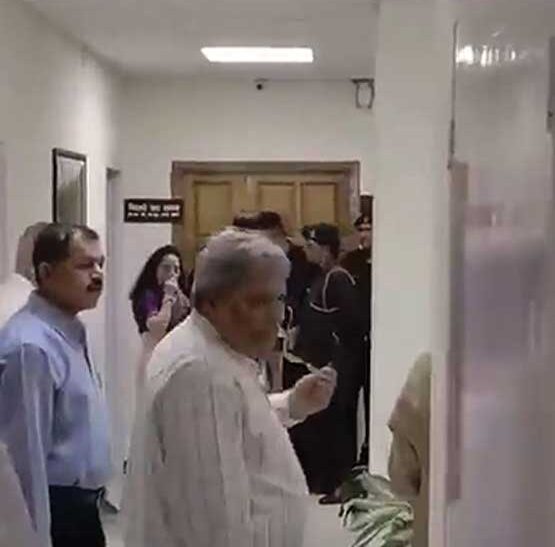
The latest development follows Monday’s tense episode at the Vice-Chancellor’s office, when Dr Baweja sought police protection amid a confrontation with faculty members. The VC had alleged that a group of faculty members attempted to enter his office, while protests by university employees added to the atmosphere of tension on the campus.
Also read Nauni University sees sharp Faculty-Administration face-off
The developments reported on Monday had already pointed to a widening gap between sections of the university’s faculty and administration. The latest VC-Registrar dispute suggests that the confrontation is now extending into the university’s top administrative structure.
The timing has also drawn attention. The Vice-Chancellor’s order reportedly refers to apprehensions regarding upcoming visits of Governor Shiv Pratap Shukla and Chief Justice of India Justice Surya Kant to the university.
The Governor is scheduled to visit the university on October 11, while the Chief Justice of India is scheduled to visit on November 22.
With the Registrar challenging the action and the Vice-Chancellor appointing another officer to discharge the Registrar’s functions, the immediate issue is now whether the state government will intervene in the dispute.
For Nauni University, what began as a confrontation between the faculty and administration has now developed into a broader institutional crisis involving the university’s top administrative offices.
The question facing the university is no longer limited to the disagreement between faculty members and the Vice-Chancellor. It now extends to the functioning and authority of the university’s administrative machinery itself.
About the Author