Hundreds of schools without buildings, raising questions over billions spent on infra in HP

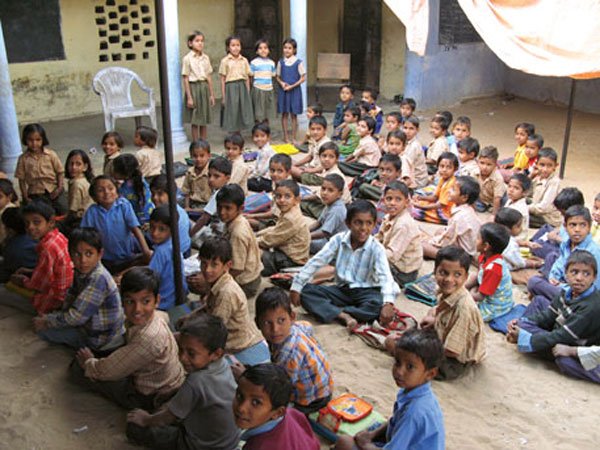
Image used for indicative purpose only. Source: Internet
Shimla, Sep 5
Despite billions of rupees being spent over the years on creation and strengthening of educational infrastructure under schemes such as Sarva Shiksha Abhiyan (SSA), Rashtriya Madhyamik Shiksha Abhiyan (RMSA), Rashtriya Uchchatar Shiksha Abhiyan (RUSA) and Samagra Shiksha, as many as 177 government schools in Himachal Pradesh are still functioning without their own buildings.
The revelation in the state Assembly has raised uncomfortable questions over the utilisation, planning and monitoring of funds earmarked for educational infrastructure in the state.
Education Minister Rohit Thakur told the Assembly on Thursday that 1,526 government schools had been closed during the past three years. Yet, even after such large-scale rationalisation of the government school network, 177 schools are still being run from alternative premises, including rest houses, community halls, Panchayat buildings and other borrowed or shared facilities.
The contradiction is difficult to ignore. On one hand, schools are being closed on grounds of low enrolment and rationalisation; on the other, functioning schools continue to struggle even for a permanent classroom.
The government informed the House that construction of 28 school buildings was under way, while funds had been released for another 14. In several other cases, construction has remained stalled because of difficulties in acquiring suitable land.
Also Read
Several Shimla schools skip DC’s Safety meeting, draw official’s ire
The disclosure raises a fundamental question: where have the infrastructure investments made in government education over the past decades gone if schools are still borrowing classrooms and buildings?
From SSA and RMSA to RUSA and subsequently Samagra Shiksha, successive governments have claimed substantial investment in expanding and modernising educational infrastructure.
These programmes were designed to universalise access, strengthen school buildings, provide classrooms, laboratories, libraries, toilets, drinking water, furniture, playgrounds and other facilities.
Yet the reality on the ground appears markedly different.
Students in some government institutions are still studying in borrowed premises. In several places, schools have had to depend upon Panchayat buildings, community halls or other government facilities. Where buildings exist, shortages of classrooms, laboratories, furniture, toilets, drinking water, playgrounds and safety infrastructure remain common.
The question becomes even more serious in an era when governments routinely speak of smart classrooms, digital education and technology-enabled learning. How can a smart classroom become a priority when a child does not even have a permanent classroom?
A recent social audit of 444 schools in Shimla district provides further evidence of the infrastructure deficit. It found that nearly 47 per cent of surveyed schools lacked adequate classroom space, around 78 per cent had inadequate or only partial furniture, 81 per cent lacked clean drinking water and more than 43 per cent did not have boundary walls or fencing. Nearly 79 per cent were located without motorable road connectivity.
These findings suggest that the problem cannot simply be attributed to the recent closure or rationalisation of schools. It points towards a deeper failure of infrastructure planning, execution and monitoring.
The issue also extends beyond school education. Questions persist over infrastructure available in state-run colleges and other educational institutions, where students in some locations continue to depend on shared facilities, inadequate laboratories, libraries, playgrounds and classrooms.
The continuing dependence on borrowed infrastructure raises questions about whether infrastructure funds were allocated according to actual requirements, whether projects were completed within prescribed timelines and whether completed assets were properly maintained.
Also Read
Ceiling plaster collapse injures Class IV student at Lagnu school in Sirmaur
It also calls for greater transparency in expenditure. Public funds allocated for school infrastructure need to be traceable from sanction and release to construction, completion and actual use.
The Assembly disclosure should therefore prompt a comprehensive audit of infrastructure expenditure under SSA, RMSA, RUSA and Samagra Shiksha, including an assessment of abandoned, incomplete, unsafe and under-utilised buildings.
The need is particularly acute in Himachal Pradesh, where difficult terrain, extreme weather and frequent disasters make safe and permanent educational infrastructure more than a developmental luxury.
Also Read
The government has closed 1,526 schools, but the question remains whether rationalisation has been accompanied by adequate investment in the schools that continue to serve children.
The paradox is stark: schools are disappearing in the name of efficiency, while those that remain are still searching for classrooms.
Before announcing more smart classrooms and digital initiatives, the government may have to answer a more basic question—after decades of infrastructure spending, why does a government school in Himachal Pradesh still have to borrow a room, a building or a playground for its students?
About the Author