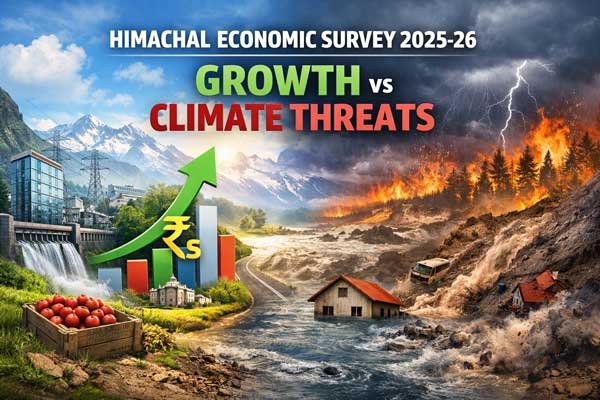
Photo used for indicative purpose only. Source Internet
Shimla, July 31,
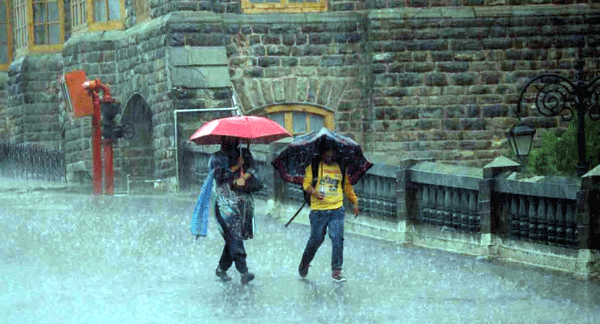
Himachal Pradesh witnessed wide variations in rainfall across districts during July 2025, with some regions recording significant surpluses while others saw alarming deficits. According to official data, Shimla received 360.1 mm of rainfall, registering a 71% increase over the normal average of 210.2 mm. Mandi, despite recording a lesser 612.1 mm rainfall compared to Shimla, showed a 58% positive departure from its average. Kullu too witnessed a substantial 25% excess, with 229.9 mm rainfall against the normal 184 mm. Other districts with surplus rainfall included Hamirpur (15%), Una (13%), Bilaspur (11%), and Sirmaur (5%).
In contrast, some districts experienced deficient rainfall during the month. Lahaul and Spiti reported only 30.5 mm rainfall, a staggering 77% below the average of 131.5 mm. Solan recorded a 17% deficit, followed by Chamba and Kinnaur with 13% below-normal rainfall each. Kangra also reported a 10% deficit despite being one of the typically wettest districts.
Interestingly, while Shimla topped the chart in terms of percentage surplus, it was Mandi that found itself at the centre of weather-related calamities. Throughout July, Mandi district witnessed a spate of cloudbursts and flash floods, especially in areas like Seraj valley, Gohar, and Karsog, which saw rainfall surging nearly 1,900% above normal on some days. These short-duration high-intensity events led to massive destruction of homes, loss of lives, road collapses, and power disruptions. According to official estimates, more than 400 homes were damaged or destroyed, and over 1,500 people had to be evacuated from vulnerable areas. This stark contrast between rainfall quantity and actual impact illustrates how disaster vulnerability is increasingly linked to rain intensity and terrain, rather than total rainfall alone.
At the broader level, the average rainfall across the state stood at 255.4 mm, nearly identical to the normal figure of 255.9 mm, suggesting a ‘normal’ monsoon on paper. However, the wide district-wise fluctuations highlight a more complex reality, where some regions face water stress while others battle disasters from sudden cloudbursts. As the monsoon progresses into August, officials are keeping a close watch on rain patterns, particularly in high-risk zones like Mandi and tribal regions facing continued deficits.
About the Author

The HimachalScape Bureau comprises seasoned journalists from Himachal Pradesh with over 25 years of experience in leading media conglomerates such as The Times of India and United News of India. Known for their in-depth regional insights, the team brings credible, research-driven, and balanced reportage on Himachal’s socio-political and developmental landscape.