Monsoon covers entire HP, heavy rain alert

Monsoon covers entire HP, heavy rain alert
Shimla, July 1
The Southwest Monsoon has finally covered the entire Himachal Pradesh, reaching the remaining parts of the state on July 1, six days later than its normal onset date of June 25.
With its latest advance, the monsoon has spread across the remaining areas of Shimla district, including Shimla city, Sirmaur, Mandi, Kullu, Lahaul and Spiti, Kangra, besides the entire districts of Solan, Una, Bilaspur, Hamirpur and Chamba.
According to the India Meteorological Department (IMD), widespread rainfall activity is expected to continue across the state during the next seven days. Heavy rainfall is likely at isolated places on July 1, while heavy to very heavy rainfall has been forecast at isolated places on July 2, 3, 5 and 6. Another spell of heavy rain is expected on July 4 and July 7.
A fresh Western Disturbance is also likely to affect northwest India from July 2, enhancing rainfall activity over Himachal Pradesh.
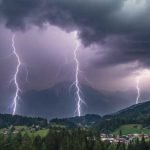
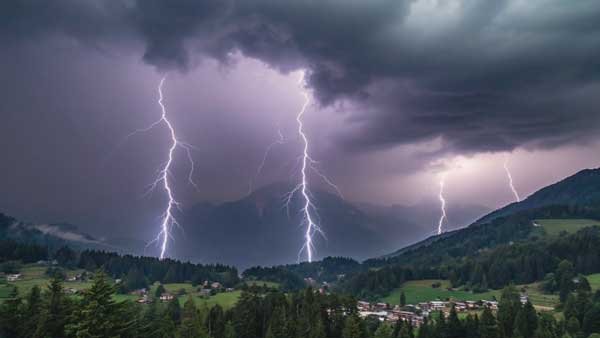
During the past 24 hours, several parts of the state received substantial rainfall. Nagrota Suriyan in Kangra district recorded the highest rainfall at 102.5 mm, followed by Ghamroor (95.2 mm), Guler (87.2 mm), Palampur (74.4 mm), Saloni in Chamba (68.2 mm), Jogindernagar (48 mm), Kahu (44.5 mm), Dehra Gopipur (38.3 mm), Berthin (37.4 mm) and Sujanpur Tira (36 mm). Thunderstorms and lightning were reported from Kufri, Shimla, Palampur, Kangra, Sundernagar, Jubbarhatti and Bhuntar, while gusty winds reached 41 kmph at Hamirpur.
Una remained the hottest place in the state with a maximum temperature of 35.4°C, while Bharmaur recorded the lowest minimum temperature at 8°C. Shimla recorded a minimum temperature of 17.4°C and a maximum of 26.4°C, receiving 1.2 mm of rainfall.
The onset of the southwest monsoon has already begun affecting normal life in the hill state. In Lahaul and Spiti district, a flash flood triggered by swollen waters in Jahalma Nallah disrupted road connectivity on the Strategic Killar-Tandi (SKTT) road. The alternate road between Phura and Jahalma Nallah has been closed due to flash floods at Jahalma Nallah (Km 20.9) and Thangini Nallah (Km 73) near Tindi, though the stretch from Thangini Nallah to Kadhu Nallah remains open. The Rohtang-Atal Tunnel North Portal road is open during the day, but the stretch beyond the North Portal towards Sarchu has been closed at Ruling Bore near Jispa. Two PWD roads in the district have also been blocked.
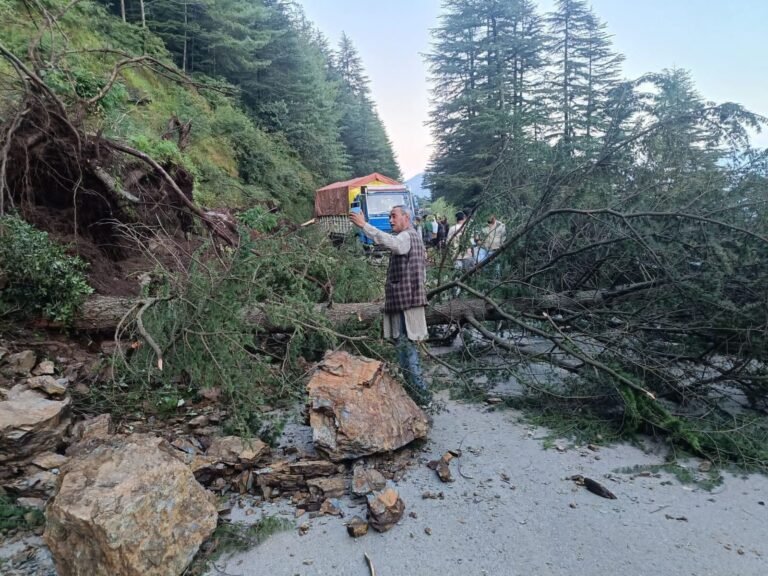
In Chamba district, heavy monsoon rains triggered a massive landslide at Salooni on Tuesday morning. Huge boulders and debris crashed onto the road, disrupting vehicular movement and posing a threat to commuters. Authorities have deployed machinery to clear the debris and restore traffic.
In Shimla Shimla -Chakkar Road disrupted last evening after moving of muck and dumping muck on the road. Highway was restored latter.
The first widespread spell of monsoon rainfall has brought much-needed relief from the prevailing heat, but it has also exposed the vulnerability of the state’s road network.
Flash floods, landslides and falling boulders have started disrupting connectivity in the higher reaches, particularly in tribal and mountainous districts. With the IMD forecasting heavy to very heavy rainfall over the next several days, the possibility of further landslides, flash floods, damage to infrastructure and traffic disruptions remains high.
The administration has advised residents and tourists to avoid unnecessary travel in vulnerable areas and to follow weather advisories closely.
The IMD has advised people, particularly those living in low-lying and landslide-prone areas, to remain alert as persistent rainfall could trigger flash floods, landslides and disruption of road traffic in vulnerable districts.
About the Author

The HimachalScape Bureau comprises seasoned journalists from Himachal Pradesh with over 25 years of experience in leading media conglomerates such as The Times of India and United News of India. Known for their in-depth regional insights, the team brings credible, research-driven, and balanced reportage on Himachal’s socio-political and developmental landscape.