Questions mount over PNB as Shimla hotel seeks CBI probe
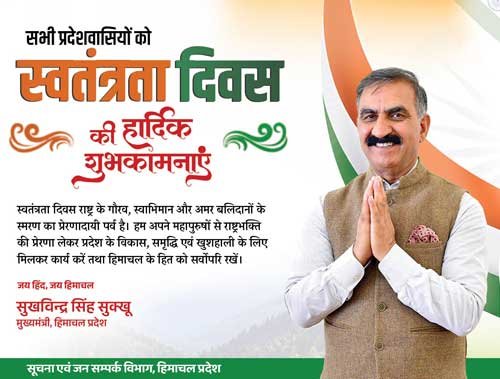

Generic representation for reporting on the Royale Retreat case and the questions raised over PNB’s actions.
Shimla, Nov 24,
At a time when the Union Government is championing MSMEs as the backbone of India’s growth story and the Himachal Pradesh government is working aggressively to revive the tourism industry battered by disasters and economic shocks, a troubling contradiction is playing out on the ground. Viable, operational MSMEs in Himachal — not sick units— are increasingly finding themselves pushed to the brink through harsh and premature recovery actions that appear to sidestep the very safeguards meant to protect them. The most glaring recent example is the case of Hotel Royale Retreat in Shimla, a functioning hospitality establishment whose treatment by Punjab National Bank (PNB) has triggered a formal complaint seeking CBI intervention, raising concerns across the sector that such actions are undermining both Prime Minister Narendra Modi’s MSME vision and Chief Minister Sukhvinder Singh Sukhu’s push to stabilise the state’s tourism economy.
A case of disproportionate action
The dispute centres on a stark imbalance: the property at the heart of the case is valued by industry observers at well over Rs 60 crore, situated in one of Shimla’s most commercially prized locations, while the outstanding loan involved is roughly Rs 12 crore. Despite the hotel’s continued operations, revenue flow, asset strength and repeated requests for restructuring under RBI’s mandated revival framework, PNB issued a demand notice on July 3, 2025, and then a SARFAESI possession notice on November 7, 2025. The accelerated use of SARFAESI, particularly without documented compliance with the RBI’s Stressed MSME Committee and Corrective Action Plan process, has led many within the industry to question the intent and timing behind the action.
These development are taking place even sidelining the fact that this loan was originally 9.90 crore and 14.25 crores has been paid back till date. Some in the hospitality sector privately fear that such patterns — especially when involving prime, high-value properties — may inadvertently create an environment that benefits those looking to target distressed assets, though no authority has confirmed such a link. Even so, the frequency with which such cases now emerge has made the possibility difficult to ignore.
CBI complaint adds weight
Documents submitted by the hotel show that the owners filed a detailed complaint addressed to the Superintendent of Police, CBI, SC-II, New Delhi. The complaint, dated May 22, 2025, also bears a receipt stamp from the office of the Superintendent of Police, Shimla, indicating local acknowledgement of the submission. The hotel states that it has formally approached the Central Bureau of Investigation regarding the matter.
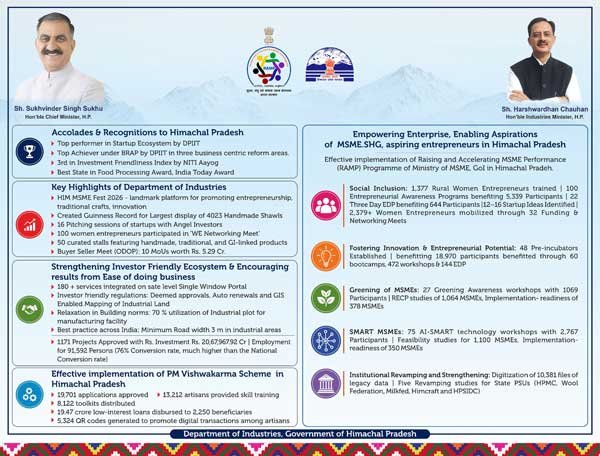
Meanwhile, the Directorate of Industries, in a letter dated November 12, 2025, cautioned PNB that moving ahead without completing the Corrective Action Plan may not be in conformity with statutory requirements. The Ministry of MSME, district MSME offices and other government bodies have echoed similar concerns, urging adherence to RBI guidelines before any coercive action is taken. Yet, uncertainty hangs over the property despite these interventions.
Impact on tourism economy
For Himachal’s tourism sector, the implications of such actions are profound. After years of pandemic lockdowns, floods, landslides and infrastructure shocks, the state government has consistently appealed to banks to facilitate restructuring for viable MSMEs rather than push them into distress. CM Sukhu himself has repeatedly emphasised that tourism — the state’s lifeline — needs institutional support, not aggressive recovery steps that crush functioning enterprises. In this context, the Royale Retreat case stands in sharp contrast to the state’s stated goals and has begun to raise uncomfortable questions about whether frontline banking decisions are truly aligned with broader government policy.
Adding weight to the controversy, FOHHRA—in a representation addressed to the Prime Minister—alleged that several hotel MSMEs across Himachal are facing similar treatment. The Federation claims that banks, “particularly PNB,” have been advancing recovery actions without forming mandatory Stressed MSME Committees, and in some cases, without conducting viability studies or TEV reports. The association warned that such actions not only violate RBI norms but risk “destroying genuine MSMEs” across the tourism-dependent state.
A second PNB case raises broader concerns
Adding to the unease is the fact that this is not the only troubling PNB-related development unfolding in the state. In a separate but equally noteworthy case, PNB Chief Manager Mansi Negi recently approached the Himachal Pradesh High Court alleging pressure to overlook irregularities in multiple loan accounts and claiming that she faced retaliation after raising concerns. Her petition seeks a court-monitored CBI investigation, and the High Court has already issued notice to the bank. While unrelated to the Royale Retreat dispute, the simultaneity and seriousness of both matters have led many industry observers to feel that all may not be well within the bank’s internal compliance and decision-making systems. The concern is not of isolated lapses but of patterns that point to deeper systemic issues impacting both borrowers and internal whistleblowers.
The Royale Retreat case has thus evolved into far more than a single bank–borrower disagreement. It sits at the intersection of institutional accountability, MSME protection, public confidence and the long-term vision for Himachal’s economic recovery. For a tourism-driven state that relies heavily on small and medium enterprises, the impact of such cases is not confined to the individuals involved; it ripples outward, influencing how thousands of entrepreneurs perceive the safety and fairness of the financial ecosystem they depend on. Whether this matter results in a transparent course correction or becomes another cautionary tale remains to be seen. But for now, the signals emerging from Himachal suggest that the frameworks meant to protect its MSMEs are being tested in ways they were never meant to be.
About the Author

The HimachalScape Bureau comprises seasoned journalists from Himachal Pradesh with over 25 years of experience in leading media conglomerates such as The Times of India and United News of India. Known for their in-depth regional insights, the team brings credible, research-driven, and balanced reportage on Himachal’s socio-political and developmental landscape.