Supreme Court quashes HC order on Apple Orchard removal, relief for Himachal growers

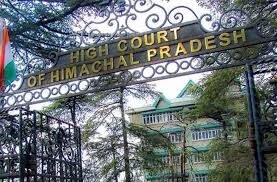
Old photo. Used for indicative purpose only
New Delhi/Shimla, Dec 16,
A major relief to apple growers across Himachal Pradesh, the Supreme Court has set aside a SHimachal Pradesh High Court order that had directed the removal of fruit-bearing orchards from encroached forest land, observing that the decision carried far-reaching social and economic consequences for marginalised and landless communities.
The apex court’s ruling was confirmed by activist and former Shimla deputy mayor Tikender Singh Panwar, one of the petitioners in the case, who shared details with HimachalScape.
A Bench comprising Chief Justice Surya Kant and Justice Joymalya Bagchi held that the High Court had erred in issuing directions that would have resulted in large-scale cutting of fruit-bearing trees, particularly apple orchards, without considering their socio-economic and environmental impact.
“The High Court order had very drastic consequences, especially for marginalised sections and landless people dependent on horticulture,” the Bench observed, adding that such matters fall within the policy domain and require a balanced welfare-oriented approach.
State asked to frame Welfare-Oriented proposal
While setting aside the High Court’s directions, the Supreme Court clarified that the state government retains the authority to act against illegal encroachments on forest land. However, it emphasised that any such action must be guided by the principles of a welfare state.
The court directed the Himachal Pradesh government to formulate a comprehensive proposal, keeping in view livelihood concerns and social realities, and place it before the Central government for appropriate consideration and compliance.
Background of the Case
The Supreme Court was hearing appeals filed by the Himachal Pradesh government along with separate petitions by Tikender Singh Panwar and environmental activist Rajiv Rai, challenging a July 2 High Court order that had instructed the forest department to remove apple orchards from forest land and replace them with forest species.
The High Court had also ordered recovery of the cost of removal from alleged encroachers as arrears of land revenue.
On July 28, the apex court had stayed the High Court order after petitioners highlighted that lakhs of people would be affected, especially during the monsoon season when large-scale tree felling could aggravate landslides and soil erosion.
Environmental and Livelihood Concerns Flagged
In his plea, Panwar had argued that the High Court’s directions were arbitrary, disproportionate, and violative of constitutional and environmental principles, warning of irreversible ecological and socio-economic damage in the fragile Himalayan region.
The petition pointed out that apple orchards play a crucial role in soil stability, support local biodiversity, and form the economic backbone of Himachal Pradesh, sustaining thousands of small and marginal farmers.
It was also argued that the order was passed without a comprehensive Environmental Impact Assessment (EIA), contrary to established environmental jurisprudence and the precautionary principle recognised by the Supreme Court in earlier cases.
According to figures cited in the petition, over 3,800 apple trees had already been felled by mid-July in areas such as Chaithla, Kotgarh and Rohru, with plans reportedly in place to remove up to 50,000 trees across the state.
“The destruction of fruit-laden apple trees triggered widespread public distress and criticism,” the petition stated, warning that such actions threatened both ecological stability and the right to livelihood under Article 21 of the Constitution.
A Breather for Apple Belt
The Supreme Court’s verdict is being seen as a significant breather for Himachal’s apple belt, particularly small growers who feared the loss of their only source of income. The ruling now places the onus on the state to evolve a humane, legally sound and environmentally balanced policy rather than enforce blanket removal orders.
About the Author

The HimachalScape Bureau comprises seasoned journalists from Himachal Pradesh with over 25 years of experience in leading media conglomerates such as The Times of India and United News of India. Known for their in-depth regional insights, the team brings credible, research-driven, and balanced reportage on Himachal’s socio-political and developmental landscape.