Shimla, Aug 6,
A tragic car plunge into the Pabbar River near Chirgaon early Wednesday, claiming three lives, has once again spotlighted the human toll of a crumbling infrastructure system in rain-battered Himachal Pradesh. As relentless monsoon rains stretch into another punishing week, the hill state finds itself increasingly paralyzed — not just by nature’s fury but also by its unpreparedness.
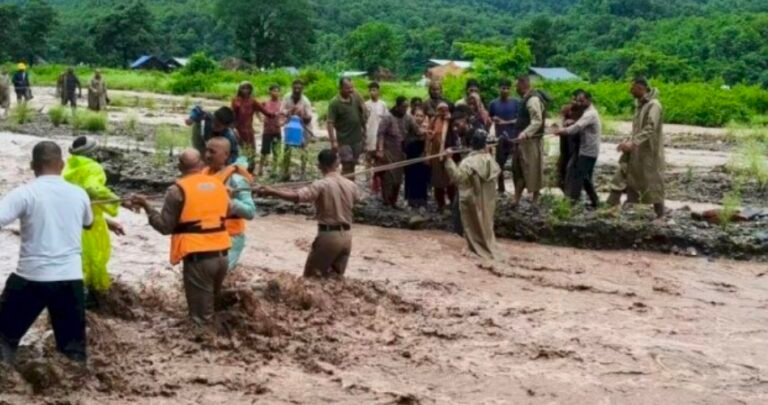
The incident, which left only one survivor out of four passengers, underscores a broader crisis. Incessant rainfall has rendered 613 roads impassable, including key national arteries like NH-21, NH-305, NH-5, and NH-3. Entire regions are facing virtual isolation, with landslides and flash floods severing vital transport and communication lifelines.
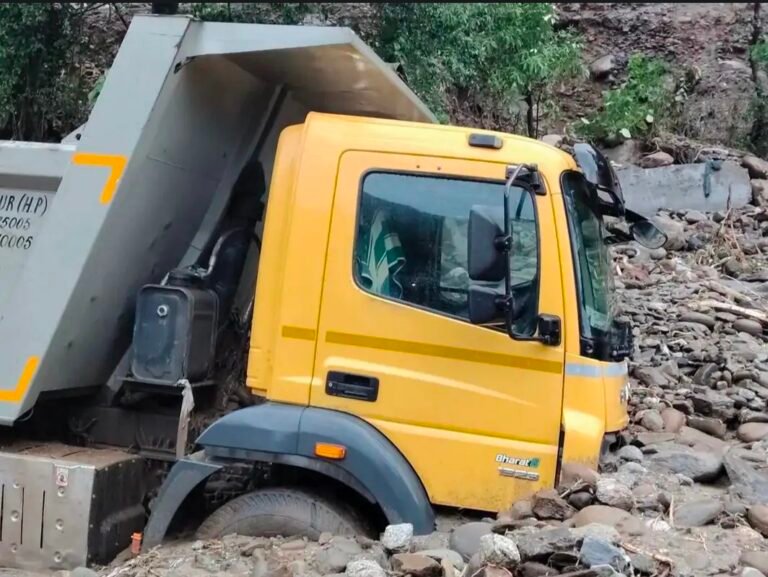
Districts like Mandi, Kullu, and Kangra are bearing the brunt of the damage, with mounting reports of stranded commuters, damaged homes, and collapsed infrastructure. Flash floods in Kullu’s Nirmand area buried five vehicles and severely damaged local shops. In Shimla’s Tutu region, a landslide crushed four vehicles, while in Baddi, the collapse of a bridge linking Dhela Panchayat to Dawni Industrial Area has cut off critical connectivity to industrial zones.
Even urban safety is compromised — in a near-miss, a tree crashed onto a moving bus near the Chhota Shimla Secretariat, with cable lines narrowly preventing a full collapse and major casualties.
The rainfall has forced authorities to suspend academic activity across multiple regions, including Rampur, Chopal, Jubbal, Sunni, Kumarsain, and Dodra Kawar. Educational institutions — from Anganwadis to top private schools like Sacred Heart Convent and St. Edward’s — have all been closed to ensure student safety.
The collateral damage on essential services paints an even grimmer picture. According to the State Emergency Operations Centre (SEOC), 1,491 power distribution transformers and 265 drinking water supply schemes have been knocked out. With electricity and clean water supply severely disrupted, daily life for thousands stands derailed.
In another precautionary move, the Kol Dam authorities released water from the Sutlej River after levels surged beyond the danger mark, raising fresh concerns for low-lying areas downstream.
So far, the monsoon season has claimed 197 lives due to rain-related incidents, with an additional 86 deaths from road accidents. Public and private property losses have crossed Rs 1,850 crore, making this one of the most damaging monsoon spells in recent years.
Disaster management teams remain deployed in high-risk areas, but officials admit that the sheer scale of the damage is challenging to address in real-time. The public has been strongly advised to stay indoors and avoid non-essential travel as rescue and restoration efforts continue under difficult conditions.
As monsoon clouds loom large, Himachal Pradesh stands at a critical juncture — a test not just of its resilience against nature, but of how swiftly and sustainably it can rebuild an overstretched infrastructure network vulnerable to climate volatility.
About the Author

The HimachalScape Bureau comprises seasoned journalists from Himachal Pradesh with over 25 years of experience in leading media conglomerates such as The Times of India and United News of India. Known for their in-depth regional insights, the team brings credible, research-driven, and balanced reportage on Himachal’s socio-political and developmental landscape.