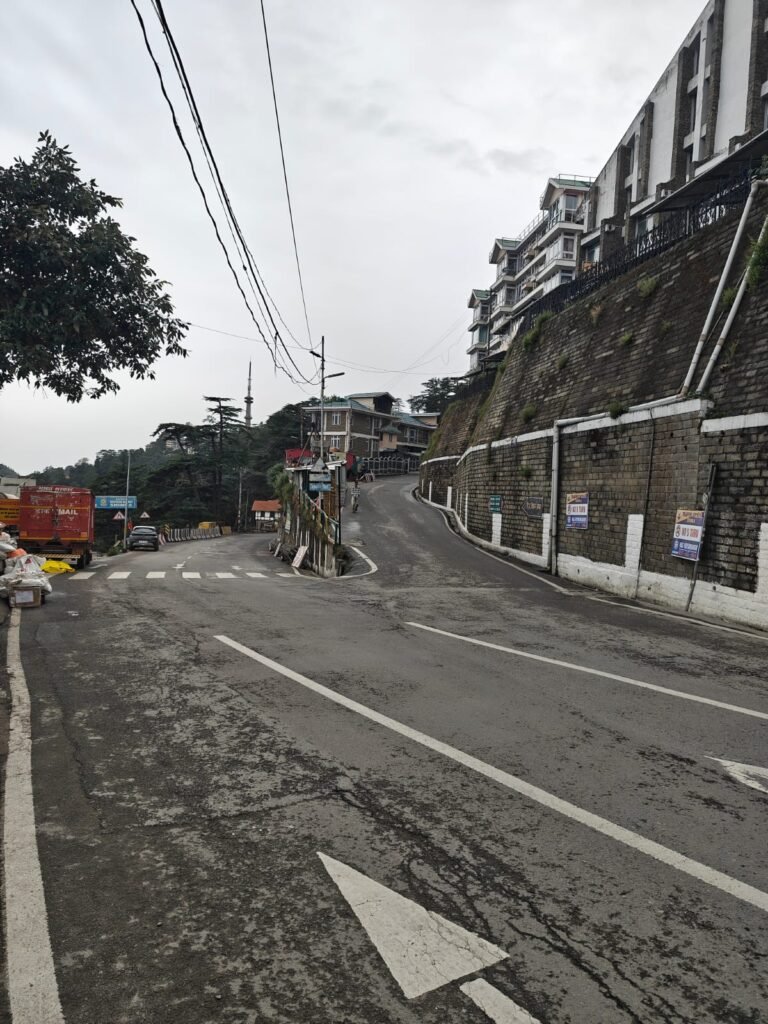
Old Photo used for indicative purpose only. Courtesy Internet
Around 18.5 Lakh tourist vehicles enter Shimla during summer season
Shimla, June 28,
The summer tourist season has brought an unprecedented rush of visitors to the Queen of Hills, with around 18.5 lakh tourist vehicles entering Shimla district during May and June this year, putting enormous pressure on the town’s narrow and limited road network.
Despite the record influx, Shimla Police has managed to keep traffic moving through an extensive and well-coordinated traffic management plan, Superintendent of Police Gaurav Singh said.
According to the SP, the district recorded nearly 8.5 lakh tourist vehicles in May, while around 10 lakh vehicles have entered during June, making it one of the busiest summer seasons in recent years. Unlike tourist footfall, the movement of tourists in Shimla is largely assessed through the number of vehicles entering the district, reflecting the heavy burden on the road infrastructure.
Also Read Heatwave triggers tourist rush in Shimla, over 70K vehicles recorded on the road
The severe heatwave in the plains drove thousands of tourists to the hill station, resulting in continuous traffic congestion, particularly on weekends and holidays. The city’s roads, originally designed decades ago for a much smaller population and vehicle load, witnessed long queues of vehicles at several bottlenecks. Traffic remained particularly heavy on the Circular Road, Cart Road, Victory Tunnel, Lift area, Sanjauli, Dhalli, Kufri Road and other important junctions.
To handle the extraordinary traffic pressure, Shimla Police almost doubled its deployment on roads. The number of police and Home Guard personnel assigned to traffic duty was increased from 136 to 265. Besides this, nearly 50 civil volunteers and 32 traffic bike riders were deployed across the city to ensure quick response to traffic jams and uninterrupted movement of vehicles.
SP Gaurav Singh said this year’s traffic management plan was based on a decentralized command system. The city was divided into five traffic sectors, each headed by a Grade-I police officer who remained on the roads throughout the day to supervise operations and immediately resolve traffic-related issues. Senior police officers also carried out frequent field inspections and monitored the traffic situation personally, ensuring that decisions were taken on the spot whenever congestion developed.
To tackle traffic disruptions quickly, sector officers worked in close coordination with traffic bike riders and three cranes stationed at strategic locations. Vehicles causing obstructions or illegal parking were removed immediately, helping restore normal traffic flow within a short time.
Recognising that a large number of vehicles entering Shimla were headed towards tourist destinations beyond the city, the police encouraged motorists travelling to Kufri, Mashobra, Naldehra, Upper Shimla and Kinnaur to use the Shoghi-Mehli bypass instead of passing through the city centre. The initiative has proved effective, with nearly 600 to 800 vehicles using the bypass every day, considerably reducing pressure on the city’s busiest roads.
The SP said effective parking management, timely dissemination of traffic advisories through social media platforms, promotion of public transport and strict enforcement of traffic rules through interceptor vehicles formed the backbone of the summer traffic management strategy.
He admitted that weekends remained particularly challenging. Tourist vehicles frequently attempted to overtake on single-lane roads, often resulting in traffic snarls and delays. Local commuters, including students, office employees, traders and lawyers, were among those affected as long queues of vehicles formed at several bottlenecks across the city.
Despite these challenges, Shimla Police ensured that traffic remained largely under control through continuous deployment of personnel, round-the-clock monitoring and coordinated action involving the Traffic Wing, district police, Home Guards, civil volunteers and other departments.
Traffic management in a hill town like Shimla, where road expansion is limited due to geographical constraints, requires constant vigilance and teamwork, the SP said. He added that the role of the Traffic Police extends beyond enforcing traffic regulations to ensuring the safety, convenience and smooth movement of residents as well as tourists visiting the state.
During a special briefing held on June 27, SP Gaurav Singh appreciated the dedication and discipline displayed by the officers and personnel of the Traffic Branch, who have been working under demanding conditions throughout the tourist season. He also honoured 10 civil volunteers with appreciation certificates for their valuable contribution in assisting the police in maintaining orderly traffic.
Expressing gratitude to residents and visitors for their cooperation, the SP appealed to motorists to obey traffic rules, avoid unnecessary overtaking, park only at designated places and use alternative routes wherever advised. He said public cooperation remains essential for ensuring safe and hassle-free travel during the remaining tourist season.
About the Author