Mahatma turns Ram(ji) might help disaster starved HP rebuild rural assets, have to share adl. burden : D K Manta
Shimla, Sept 20
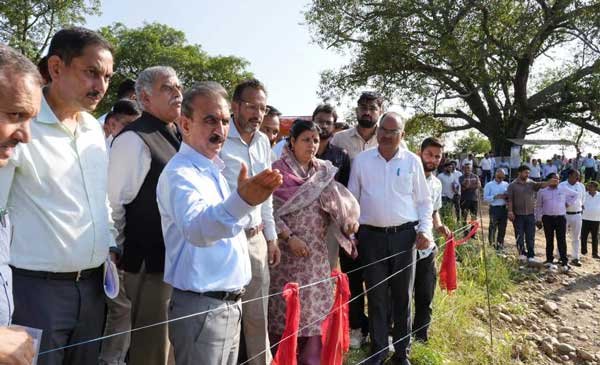
The inclusion of post-disaster restoration, flood protection and other disaster-mitigation works in the newly notified list of permissible works under the Viksit Bharat–Guarantee for Rozgar and Ajeevika Mission (Gramin) (VB-G RAM G) could provide Himachal Pradesh an additional avenue to undertake reconstruction and resilience works in areas hit by floods, cloudbursts and landslides.
The Union Ministry of Rural Development has placed “Special Works to Mitigate Extreme Weather Events and Disaster Preparedness” as a separate category under the new scheme.
The list includes cyclone and flood shelters, embankments, flood-protection walls, retaining walls, stabilisation ponds and other disaster-mitigation works. It also specifically permits post-disaster restoration of rural roads and community assets.
The list also gives prominence to water conservation, rural infrastructure and livelihood-related works, including check dams, flood-diversion channels, irrigation structures, watershed works, rural roads, community buildings, agricultural storage facilities and livestock shelters.
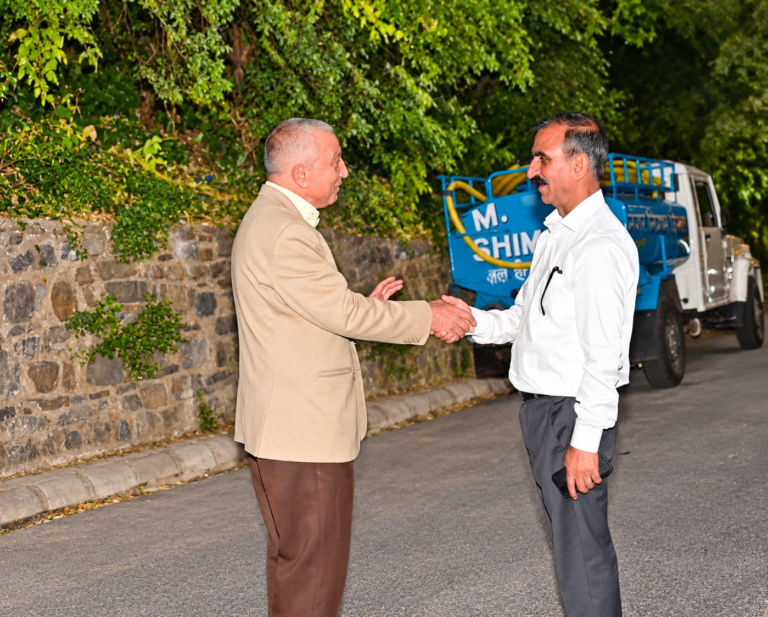
Former member of the State Appellate Authority, Himachal Pradesh, D K Manta, said the new provisions could be particularly relevant for Himachal, which has large areas still requiring restoration after major disasters.
However, he cautioned that the funding architecture of VB-G RAM G would also impose additional financial obligations on the state.
Manta told HS that under the Mahatma Gandhi National Rural Employment Guarantee Act, 2005, 100 per cent of the wages of unskilled manual workers were borne by the Centre.
The Centre also provided 75 per cent of material costs and up to six per cent of total expenditure towards administrative expenses. The MGNREGA was a demand-driven programme, with central funds released according to the requirement for employment.
Under the VB-G RAM G Act, however, the scheme has been converted into a Centrally Sponsored Scheme. The Centre’s official position is that the funding ratio is 90:10 for the North-Eastern and Himalayan states, including Himachal Pradesh, Uttarakhand and Jammu and Kashmir, compared with 60:40 for other states with legislatures.
Manta said the change was important because the Centre would now determine a state-wise “normative allocation” based on prescribed parameters. According to him, expenditure beyond the earmarked allocation would have to be met by the state from its own resources.
The Union Government’s own explanatory material confirms that expenditure beyond the normative allocation is to be the responsibility of the state, while states are also responsible for unemployment allowance and delay compensation.
He said another major change was that additional expenditure incurred by Himachal on providing wage employment under MGNREGA was earlier regularised through the Centre’s demand-driven funding mechanism, whereas under the new framework any expenditure beyond the prescribed allocation would have financial implications for the state.
Manta also pointed to the increase in the administrative expenditure ceiling from six per cent under MGNREGA to nine per cent under the new arrangement. The former provision allowed the Centre to provide up to six per cent of total MGNREGA expenditure towards administrative expenses.
On employment, he said although VB-G RAM G raises the statutory guarantee from 100 to 125 days, states can notify an aggregate period of up to 60 days during peak sowing and harvesting seasons when scheme works will not be undertaken. The Union Government describes this provision as a measure to ensure availability of farm labour during peak agricultural seasons.
Manta said that, in practical terms, the combination of the normative allocation, state responsibility for expenditure beyond that allocation and the new funding pattern would place an additional burden on Himachal’s finances.
His observations come against the backdrop of Chief Minister Sukhvinder Singh Sukhu’s concerns over the state’s deteriorating fiscal position and the reduction of central support. The state has also been seeking greater central assistance for reconstruction following successive disasters.
The new disaster-related provisions could nevertheless prove useful for Himachal because the permissible works specifically include restoration of rural roads and community assets after disasters, along with flood-protection walls, retaining structures and other mitigation works.
The provision could therefore allow the state to dovetail part of its rural employment programme with restoration requirements in disaster-hit areas of 2023 and 2025. The Union Government has said that VB-G RAM G is intended to cover special works for mitigating extreme weather events and disaster preparedness, including measures relating to floods, landslides, forest fires and other extreme weather events.
Manta said the new framework had already come into force across the country from July 1, 2026 and that, in his assessment, its financial implications would need to be carefully examined by Himachal Pradesh, particularly in view of the state’s limited fiscal resources.
About the Author