Artist who immortalised hill life through Shimla’s iconic statue and Mall Road murals breathed life into the state’s cultural heritage
Shimla, Oct 25,
Shimla has lost one of the artists who helped shape its cultural identity with the demise of internationally acclaimed sculptor and artist Prof. Mahesh Chandra Saxena(92), who passed away early Sunday late afternoon following a sudden cardiac arrest at his residence. His death has left the city’s artistic community mourning the loss of a master craftsman whose creations became inseparable from the heritage landscape of the Queen of Hills.
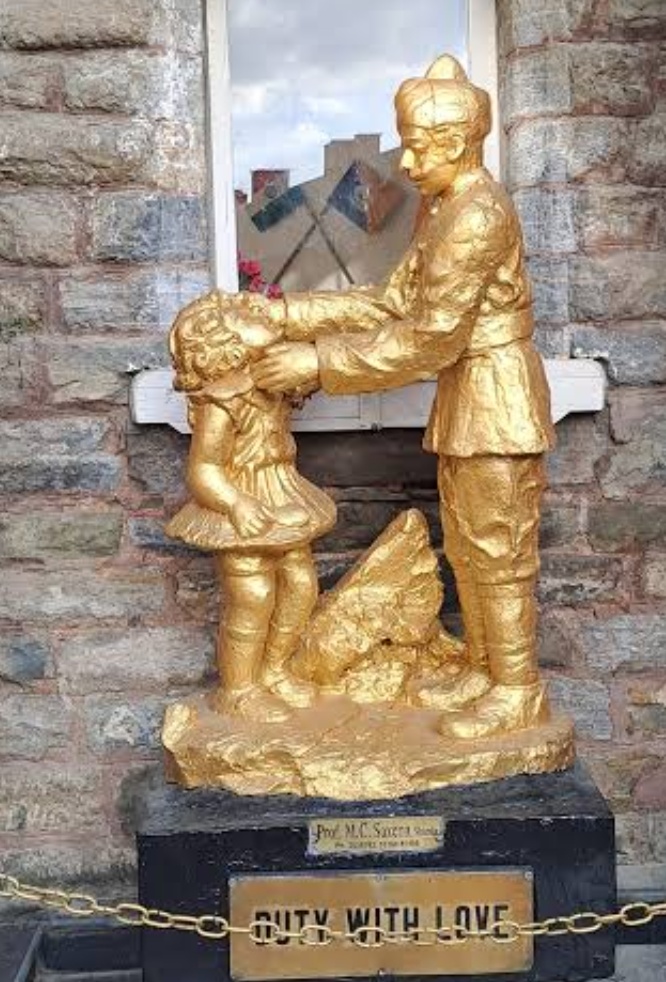
For generations of residents and visitors, Prof. Saxena’s art was not confined to galleries or exhibition halls. It became part of Shimla’s everyday life, telling stories of the hills through public sculptures and murals that captured the simplicity, labour and traditions of Himachal Pradesh.
Among his most recognised creations is the iconic ‘Himbala’ or ‘Pahari Woman’ statue at Daulat Singh Park on the historic Ridge. Depicting a hill woman carrying a water pot on her head, the sculpture embodies the grace, resilience and simplicity of mountain life. Standing against Shimla’s changing seasons, the figure has become a familiar presence in the photographs and memories of countless tourists.
The statue is more than a public artwork. It represents the cultural identity of the hills, preserving in sculptural form the image of a traditional Pahari woman whose everyday life reflected the relationship between people, labour and the mountain environment.
Prof. Saxena’s contribution to Shimla’s visual heritage extends well beyond the Ridge. The three celebrated cast-stone murals with a bronze finish on Mall Road, created in the early 1980s, remain among his enduring artistic achievements. Depicting apple picking, tea-leaf plucking and the life of Gaddi shepherds and pastoral communities associated with sheep rearing and pashmina, the murals document the occupational traditions that have shaped Himachal’s rural economy.
These large-scale works transformed public spaces into an open-air record of the state’s cultural and economic life. Their continued presence along Mall Road has made them familiar landmarks for residents while introducing visitors to traditions that might otherwise remain distant from the experience of the modern tourist town.
Originally from Lucknow, Prof. Saxena came to Shimla in the 1960s and eventually made the hill capital his home. Over the decades, his artistic engagement with the region developed into a sustained effort to document its people, livelihoods and heritage through sculpture.
His work was distinguished by its ability to combine artistic expression with cultural documentation. Rather than merely creating decorative installations, he gave lasting form to the people and occupations that define the hill state’s identity. His sculptures and murals continue to offer a visual connection with a way of life undergoing considerable social and economic change.
In his later years, Prof. Saxena also became an advocate for the conservation of heritage art. He repeatedly stressed the importance of scientifically sound restoration practices to protect historical artworks from deterioration and the pressures of urban development. His concerns reflected a larger question facing Shimla: how to preserve its cultural character as the city continues to expand and modernise.
His passing has prompted tributes from those who regard his creations as an integral part of Shimla’s heritage. The loss is particularly poignant because much of his legacy exists in public spaces, where his art continues to be encountered by people who may not even know the name of its creator.
The Himbala statue will continue to stand on the Ridge, while the murals on Mall Road will keep narrating stories of apple orchards, tea gardens and pastoral life. Together, they constitute an enduring artistic record of Himachal Pradesh and the vision of a sculptor who chose to make Shimla his home.
Prof. Saxena leaves behind a body of work that has become part of the city’s collective memory. His death marks the end of an era for Shimla’s artistic community, but the figures he shaped in stone will continue to connect future generations with the cultural roots of the hills.
For Shimla, the sculptor may be gone, but the Himbala he immortalised will continue to smile silently on the Ridge, a timeless reminder of the artist who gave the mountains one of their most recognisable human faces.
About the Author

Himachal ki har badi khabar, sabse pehle aapke paas
Breaking news, local updates aur exclusive stories — seedha WhatsApp ya Email par. Free. No spam.
WhatsApp Alerts
Instant news seedha aapke phone par. Ek click me subscribe karein.
Subscribe on WhatsAppEmail Newsletter
Har nayi post ka link aapke inbox me. Kabhi bhi unsubscribe karein.