

Chamba, July 14,
A surge in crop damage caused by Fall Armyworm has prompted the Krishi Vigyan Kendra (KVK) in Chamba district to issue an urgent advisory for maize and corn growers. With the pest rapidly spreading across fields, agricultural authorities have stepped in to help prevent what could become a severe threat to this season’s harvest.
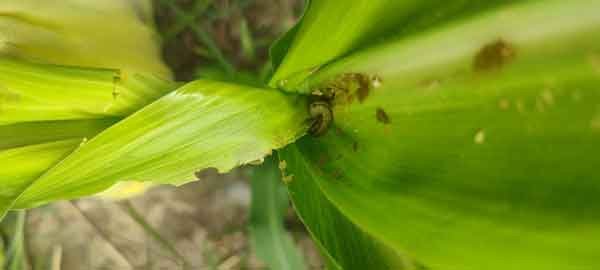
Dr. Dharmendra Kumar, Senior Scientist and In-charge of KVK Chamba, confirmed that larvae of the invasive species Spodoptera frugiperda, commonly known as Fall Armyworm, are feeding on standing maize crops, resulting in alarming damage. According to him, early signs of infestation include irregular round and rectangular holes in maize leaves, as well as visible droppings on the plants. He added that the pest lays greyish-brown eggs covered in hair-like structures, which are usually deposited in clusters and can be spotted with close inspection.
Responding to the outbreak, the district administration has constituted a task force comprising scientists and officials, including Dr. Bhupendra Singh, Deputy Director of Agriculture, and scientist Dr. Jaya Chaudhary, along with subject experts from the Agriculture Department. This team has already begun visiting affected areas to guide farmers on immediate control strategies.
As part of the advisory, farmers have been urged to apply specific insecticides such as Chlorantraniliprole 18.5 SC, Spinetoram 11.7 SC, or Emamectin Benzoate 5 SG in appropriate dosages, using a substantial quantity of water depending on the crop’s age. For younger crops, 120 litres of water per acre is recommended, while older crops may require up to 200 litres. In cases where the crop has crossed 40 days and spraying becomes difficult due to plant height and density, farmers have been advised to adopt a root-level treatment. This method involves mixing the insecticide with water and soil and applying it directly at the plant base.
In addition to chemical intervention, KVK experts are advocating timely sowing in rows and vigilant monitoring of crop leaves to identify and manually remove any egg clusters before they hatch. For farmers looking to incorporate biological methods, products containing Bacillus thuringiensis are recommended. These can be applied through soil mixtures to naturally target the larvae.
This advisory comes at a crucial moment, as maize cultivation in Chamba is currently at its peak phase. Experts warn that any delay in action could result in considerable crop loss, impacting both food availability and farmer incomes in the region. The Fall Armyworm, which was first reported in India in 2018, has since emerged as a major pest in multiple states, and its arrival in the hill district of Chamba marks a new challenge for local agriculture.
The KVK has assured ongoing support to farmers during this crisis and is coordinating closely with field officers to monitor the situation. With swift, informed intervention, authorities hope to contain the infestation and safeguard the maize crop during this critical growing season.
About the Author

The HimachalScape Bureau comprises seasoned journalists from Himachal Pradesh with over 25 years of experience in leading media conglomerates such as The Times of India and United News of India. Known for their in-depth regional insights, the team brings credible, research-driven, and balanced reportage on Himachal’s socio-political and developmental landscape.










1 thought on “Fall Armyworm outbreak threatens Chamba’s Maize yield”