Shimla, Dec 12,
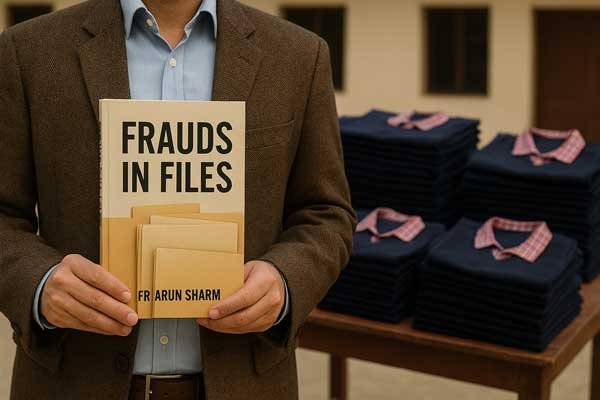
The second article from former IAS officer Dr. Arun Sharma’s newly released book ‘Frauds in Files’ details what the author describes as significant procedural lapses and selective action in the handling of an alleged Rs 79 lakh embezzlement at the Centre of Excellence, Government Degree College, Sanjauli. Based on departmental files, internal notes, audit reports and RTI documents, the book reconstructs how the alleged siphoning of funds occurred between 2010 and 2016 and how, in the author’s assessment, the subsequent inquiries and disciplinary proceedings unfolded within the system.
Dr. Sharma writes that when he was assigned in 2018 to review the prosecution of dealing clerk Rajneesh Thakur, the official records pointed instead to wider structural issues. Citing a Finance & Audit enquiry led by Joint Controller V. K. Verma, he notes that irregular withdrawals and diversion of college funds continued for years without detection by routine internal or external audits, including those examined by the CAG.
According to the book, five officials—including then Principal Dr. J. S. Negi—were chargesheeted in early 2017. Dr. Sharma refers to an internal noting dated 25 August 2017 by the Additional Chief Secretary (Education), questioning why a whistleblower had been chargesheeted even as proposals began emerging to relieve senior officials. The narrative states that subsequent file notings increasingly favoured dropping charges against supervisory officials, and that an administrative approval on 26 October 2017 allowed withdrawal of charges even before all annexures to the chargesheet had been finalised. Several senior officers later retired, resulting in closure of proceedings under service rules.
The author further recounts an interaction in 2018 with former BJP Cabinet Minister Narendra Bragta, whom he writes had sought relief for an individual connected with the matter. He also notes that some accused had earlier benefited from decisions taken during the Congress government led by the late Virbhadra Singh. Dr. Sharma interprets these developments as reflecting an overall hesitancy across political lines to pursue certain actions, though he emphasises that these are his observations drawn from the files.
By late 2018, the book records, only dealing clerk Rajneesh Thakur continued to face prosecution under various IPC sections and the Prevention of Corruption Act. Dr. Sharma argues that action limited solely to a junior employee in a case involving multiple tiers of financial authorisation did not align with the documentation available. He writes that repeated departmental reviews revisited the same issues, cumulatively weakening the case and narrowing accountability.
The chapter presents the Sanjauli College episode as an example of what the author sees as systemic vulnerabilities—ranging from administrative discretion and audit gaps to political considerations—which, in his view, allowed the alleged embezzlement to remain undetected and later complicated efforts to establish responsibility. These observations have renewed debate on whether the matter warrants re-examination to assess the scope for recovering funds and ensuring fuller accountability.
All claims and interpretations reported here are attributed to the author’s book, and no independent verification of the assertions was available at the time of publication.
About the Author

The HimachalScape Bureau comprises seasoned journalists from Himachal Pradesh with over 25 years of experience in leading media conglomerates such as The Times of India and United News of India. Known for their in-depth regional insights, the team brings credible, research-driven, and balanced reportage on Himachal’s socio-political and developmental landscape.