Lunar Eclipse Taboos Persist Despite Scientific Clarity on ‘Blood Moon’ Phenomenon
Lunar Eclipse Taboos Persist Despite Scientific Clarity on ‘Blood Moon’ Phenomenon
Shimla, March 3,
A celestial event that is unfolding with precise astronomical predictability today has also brought into focus the enduring coexistence of tradition and scientific understanding across parts of the country. The lunar eclipse, widely tracked by observatories and space agencies, was accompanied by the reappearance of customary beliefs and practices that have long been associated with such occurrences.
Watch the eclipse: https://www.timeanddate.com/eclipse/in/india
In several households, daily routines were adjusted in accordance with traditional norms. Many families refrained from cooking or consuming food after the onset of what is commonly referred to as sutak, a period considered inauspicious in certain cultural contexts. Meals were prepared in advance, while consumption of freshly cooked food was avoided through much of the day. In some towns, temples remained closed for specific hours, and devotees chose to stay away, reflecting long-held perceptions about ritual purity during an eclipse.
At the same time, there was little disruption to broader public life. Offices, markets and institutions functioned as usual, and individuals continued to use modern amenities without hesitation. The simultaneous observance of ritual practices within private spaces and the continuation of everyday activities in public showcases a pattern often seen during such events.
Also read: Total Lunar Eclipse on September 7–8 to be visible across India
Alongside these practices, messages and advisories circulated in some regions linking the eclipse to broader uncertainties, including potential instability or adverse developments. While such claims found traction in certain quarters, they remain part of belief systems that are not supported by empirical evidence.
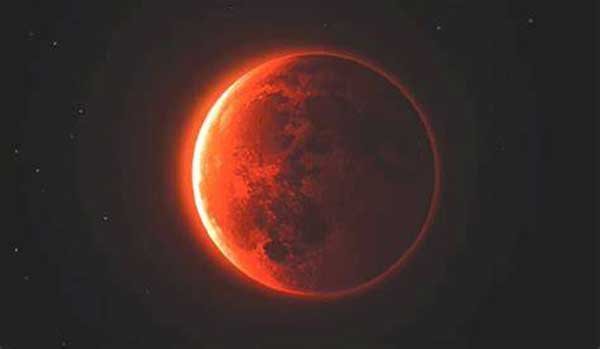
Scientific institutions and astronomers maintained that the lunar eclipse is a natural and well-understood phenomenon. It occurs when the Earth positions itself between the Sun and the Moon during a full moon phase, causing the Earth’s shadow to fall on the lunar surface. The reddish hue sometimes observed, often referred to as a “blood moon,” is the result of sunlight being scattered through the Earth’s atmosphere, a process similar to what gives sunsets their colour.
Experts have consistently stated that lunar eclipses pose no risk to human health and can be safely observed with the naked eye. They have also clarified that there is no established scientific basis linking such celestial events to earthly disruptions or personal outcomes.
The event forms part of a broader astronomical cycle, with similar eclipses recorded in the past and expected in the future. Observations across different regions varied, with some locations witnessing partial phases while others experienced a more complete alignment.
However, the day’s developments once again highlighted how deeply rooted cultural practices continue to shape responses to natural phenomena, even as scientific explanations remain widely accessible.
About the Author

The HimachalScape Bureau comprises seasoned journalists from Himachal Pradesh with over 25 years of experience in leading media conglomerates such as The Times of India and United News of India. Known for their in-depth regional insights, the team brings credible, research-driven, and balanced reportage on Himachal’s socio-political and developmental landscape.