Shimla Mayor Tenure Case: Himachal High Court may decide Surinder Chauhan’s fate this week
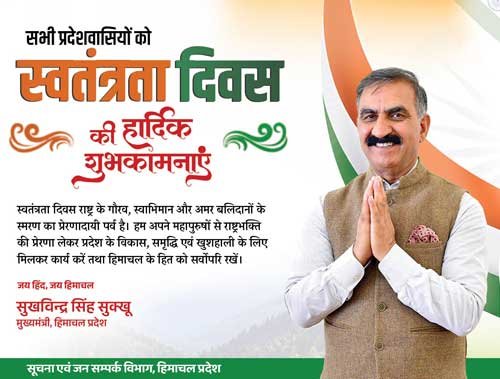

Old photo used for indicative purpose only
Shimla Mayor Tenure Case: Himachal High Court may decide Surinder Chauhan’s fate this week
Shimla, March 3,
A decision that could directly alter the leadership of the Shimla Municipal Corporation (SMC) and reset the debate on women’s political representation, the Himachal Pradesh High Court may rule later this week on the continuation of Mayor Surinder Chauhan—an outcome keenly watched by 21 women councillors in the 34-member House.
What began as a legislative amendment has escalated into a constitutional confrontation involving the State Government, Raj Bhavan, Vidhan Sabha, State Election Commission and the Opposition. At the core lies a critical legal question: can an ordinance extend an elected office’s tenure beyond its fixed statutory term without final gubernatorial assent?
A division bench comprising Chief Justice Gurmeet Singh Sandhawalia and Justice Bipin Chandra Negi has been hearing a Public Interest Litigation filed by Advocate Anjali Soni, challenging the continuation of the Mayor and Deputy Mayor beyond the prescribed two-and-a-half-year tenure under the Himachal Pradesh Municipal Corporation Act.
Shimla Mayor tenure case. Also read: Himachal Pradesh Budget Session 2026: Assembly repasses Shimla Mayor tenure amendment bill
The High Court has already signalled concern over delays, imposing a Rs 50,000 cost on the State government for failing to file its reply despite repeated adjournments.
During the latest hearing, Advocate General Anoop Rattan submitted that the State has fulfilled its legislative role, stating that the ordinance extending tenure was promulgated and later replaced by a Bill passed in the Assembly. However, with the Governor yet to grant assent, he argued that the matter now rests with Raj Bhavan. The state has sought more time, and the case is likely to be taken up again after Holi.
The bench had earlier observed that an ordinance has a limited lifespan and cannot continue indefinitely without being converted into law—an observation that has become central to the dispute.
Senior Advocate Sudhir Thakur, appearing for the petitioners, argued that once the ordinance lapsed without gubernatorial assent to the replacement Bill, it became void in law. He contended that the Mayor’s tenure ended on November 15, 2025, and any continuation beyond that violates statutory provisions. He also highlighted protests by women councillors, linking the issue to denial of rotational reservation.
With 21 women councillors in the House, the petitioner argues that a woman was due to assume the mayoral office under the roster system, and the ordinance has effectively stalled that transition.
The state maintains that the Bill—passed during the Winter Session and reconsidered in the Budget Session—was returned by the Governor due to technical concerns and is being processed again in line with constitutional procedure.
Legal observers are also tracking the possible relevance of the Supreme Court’s ruling in State of Tamil Nadu vs R.N. Ravi, which clarified timelines and responsibilities around gubernatorial assent—an aspect that could influence how the High Court views the delay.
As proceedings resume, the High Court’s order—if delivered this week—could have far-reaching implications, not just for the tenure of Shimla’s Mayor but for the limits of ordinance powers, gubernatorial discretion, and the enforcement of constitutional guarantees in local governance.
Shimla Mayor tenure case
About the Author

The HimachalScape Bureau comprises seasoned journalists from Himachal Pradesh with over 25 years of experience in leading media conglomerates such as The Times of India and United News of India. Known for their in-depth regional insights, the team brings credible, research-driven, and balanced reportage on Himachal’s socio-political and developmental landscape.