Kishau Dam breakthrough signals a policy shift, though concerns remain for HP

Kishau Dam breakthrough signals a policy shift, though concerns remain for HP
Shimla, June 17,
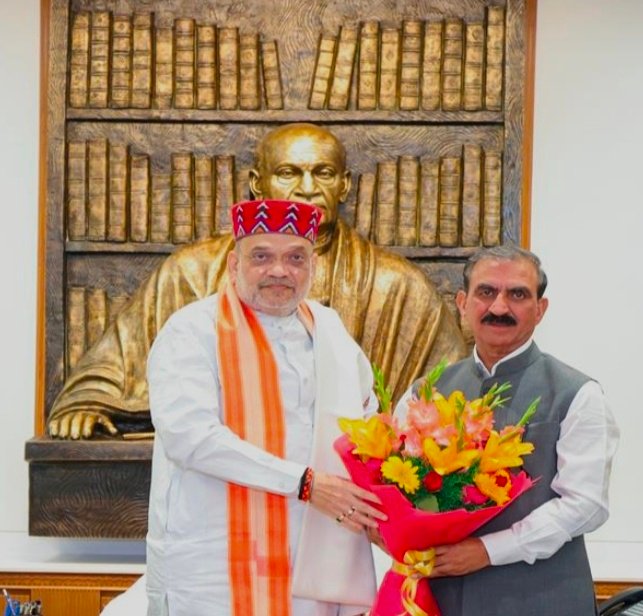
Chief Minister Sukhvinder Singh Sukhu announced on Tuesday to complete modalities over long-pending Kishau Dam Project indicating it as major political and financial milestone for the states of Himachal Pradesh and Haryana.
For long time Harayana was pressing the state to release enough water from Himachal Pradesh to overcome shortage of water.
The Centre’s in-principle agreement that the beneficiary states of Delhi, Haryana and Rajasthan would bear the estimated Rs 2,000 crore power component cost of the project has resolved an eight-year deadlock that had stalled progress on the 422 MW Kishau Dam proposed on the Tons River, a major tributary of the Yamuna.
The state government accepted the arrangement negotiated during the previous BJP administration, Himachal Pradesh would have been required to contribute approximately Rs 800 crore despite its constrained fiscal position.
According to State government spokesperson Himachal Pradesh is expected to receive around 100 crore units of electricity annually from the project, generating an estimated revenue of Rs 600 crore each year while avoiding a significant upfront financial obligation.
The Sukhu government has presented this development as a success in its broader efforts to secure the state’s rightful share of hydropower resources and pending dues.
Politically, the development is noteworthy because it has occurred despite recurring differences between the Congress government in Shimla and the BJP-led government at the Centre. Since assuming office, the Sukhu administration has repeatedly raised concerns regarding financial assistance, delays in the release of disaster-relief funds and support for infrastructure projects.
The Kishau decision therefore illustrates that when a project serves the interests of multiple states and addresses pressing water and energy requirements, agreements could emerge through sustained engagement and mutual accommodation, even if driven more by practical necessity than political consensus.
The project, however, extends beyond power generation. Its primary significance lies in strengthening long-term water security. Northern India, particularly Haryana, Delhi and parts of Rajasthan, has been experiencing increasing water stress due to rapid urbanisation, declining groundwater levels and deteriorating river quality.
The Kishau reservoir is expected to enhance regulated water availability for these regions while simultaneously generating electricity.
A similar rationale underpins the Renuka Dam project in Sirmaur district, which is primarily intended to augment drinking water supplies to the National Capital Region.
Together, these projects reflect a broader trend in which Himalayan states increasingly serve as critical water sources for the densely populated plains.
However, this model raises important policy considerations for Himachal Pradesh. While downstream states receive assured drinking water and irrigation benefits, the hill state bears a substantial share of the environmental and social costs.
Large reservoirs require the acquisition of agricultural land, displacement of families, relocation of villages and long-term ecological adjustments. In many cases, the principal beneficiaries are located far from the communities directly affected by these developments.
This reality has sustained a long-standing debate within the state. Critics argue that while hydropower and water infrastructure projects contribute significantly to national development, existing compensation frameworks do not adequately reflect the sacrifices made by mountain communities.
They contend that states such as Himachal Pradesh should receive enhanced royalty, environmental compensation and rehabilitation support in recognition of the vital ecosystem services they provide to the rest of the country.
The broader challenge is that the water scarcity confronting northern India is not solely a consequence of inadequate storage capacity.
It is also linked increasing pollution in major rivers and water bodies. Rivers such as the Yamuna continue to be affected by industrial discharge, untreated sewage and encroachments, reducing the availability of clean water.
As a result, policymakers increasingly rely on relatively pristine Himalayan river systems to meet the growing drinking water requirements of urban centres.
In this context, projects such as Kishau and Renuka address immediate water supply needs but do not fully resolve the underlying causes of the crisis.
Also Read Himachal files FIR against BBMB over Pong dam flooding
Unless pollution control, wastewater treatment and river restoration receive equal priority, pressure on Himalayan rivers is likely to increase further.
For Himachal Pradesh, therefore, the Kishau breakthrough represents both an opportunity and a reminder. It secures meaningful financial benefits and demonstrates the value of sustained negotiation and engagement among stakeholders.
At the same time, it reinforces the state’s role as a provider of water and energy to northern India—a responsibility that carries significant environmental and social implications.
The challenge before policymakers is to ensure that future agreements strike an appropriate balance between national priorities and the interests of local communities. Development initiatives can achieve sustainable success only when those who bear their costs are recognised as equal stakeholders in the benefits they create.
About the Author

The HimachalScape Bureau comprises seasoned journalists from Himachal Pradesh with over 25 years of experience in leading media conglomerates such as The Times of India and United News of India. Known for their in-depth regional insights, the team brings credible, research-driven, and balanced reportage on Himachal’s socio-political and developmental landscape.