Barely 10% of healthcare workers trained on (AQI) Air Quality Index, says research

Photo used for indicative purpose only. Source: Internet
Shimla, Nov 3,
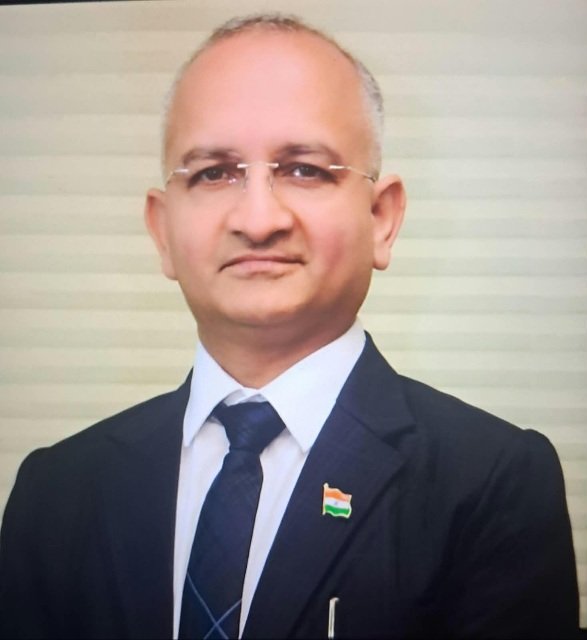
A startling revelation emerged at the International Conference on Advanced Frontiers in Forensic Science and Environmental Sustainability (AFSES-2025) held at the State Forensic Science Institute, Junga, when Dr. Ajay Kumar Singh, Block Medical Officer from Health Block Syri, Solan, disclosed that barely six percent of paramedical staff take any initiative to maintain air quality inside hospitals, and only ten percent have received any formal training related to the Air Quality Index (AQI).
Presenting his research paper titled “Care for Air: Assessment of Environmental Dynamics among Health Care Professionals of Health Block Syri, Solan, India,” Dr. Singh highlighted a serious gap between awareness and action among healthcare providers regarding air pollution and its impact on patient health. The pilot study, based on a telephonic survey of 16 doctors and 28 paramedical staff from five hospitals in Solan district, assessed their knowledge, attitude, and practices on air pollution.
While the study found that 100% of respondents recognized air pollution as a major health hazard, less than half understood technical aspects such as the Air Quality Index or air changes per hour — key parameters in ensuring safe indoor environments. Surprisingly, none of the doctors and only a few paramedical staff had ever checked AQI levels in hospital premises.
Dr. Singh said that although healthcare providers are well aware of the health impacts of air pollution, their attitude towards implementing preventive and corrective measures remains largely passive. “Air pollution silently worsens respiratory illnesses, yet very few in the medical community actively monitor or address indoor air quality,” he emphasized.
He urged that mandatory training on air quality management be introduced for all healthcare professionals and that regular air monitoring and ventilation practices become a part of hospital protocol. He also recommended stronger information, education, and communication (IEC) measures within hospitals to promote awareness among both staff and patients.
The conference, jointly organized by the Departments of Forensic Science and Environmental Science, Himachal Pradesh University, in collaboration with the Directorate of Forensic Services, Shimla Hills (Junga), brought together experts to discuss innovations, technologies, and sustainable solutions for environmental and public health challenges.
Dr. Singh’s presentation sparked wide discussion among delegates, who agreed that improving environmental literacy among healthcare professionals could significantly help reduce the disease burden linked to polluted air — both inside and outside hospital walls.
About the Author

The HimachalScape Bureau comprises seasoned journalists from Himachal Pradesh with over 25 years of experience in leading media conglomerates such as The Times of India and United News of India. Known for their in-depth regional insights, the team brings credible, research-driven, and balanced reportage on Himachal’s socio-political and developmental landscape.